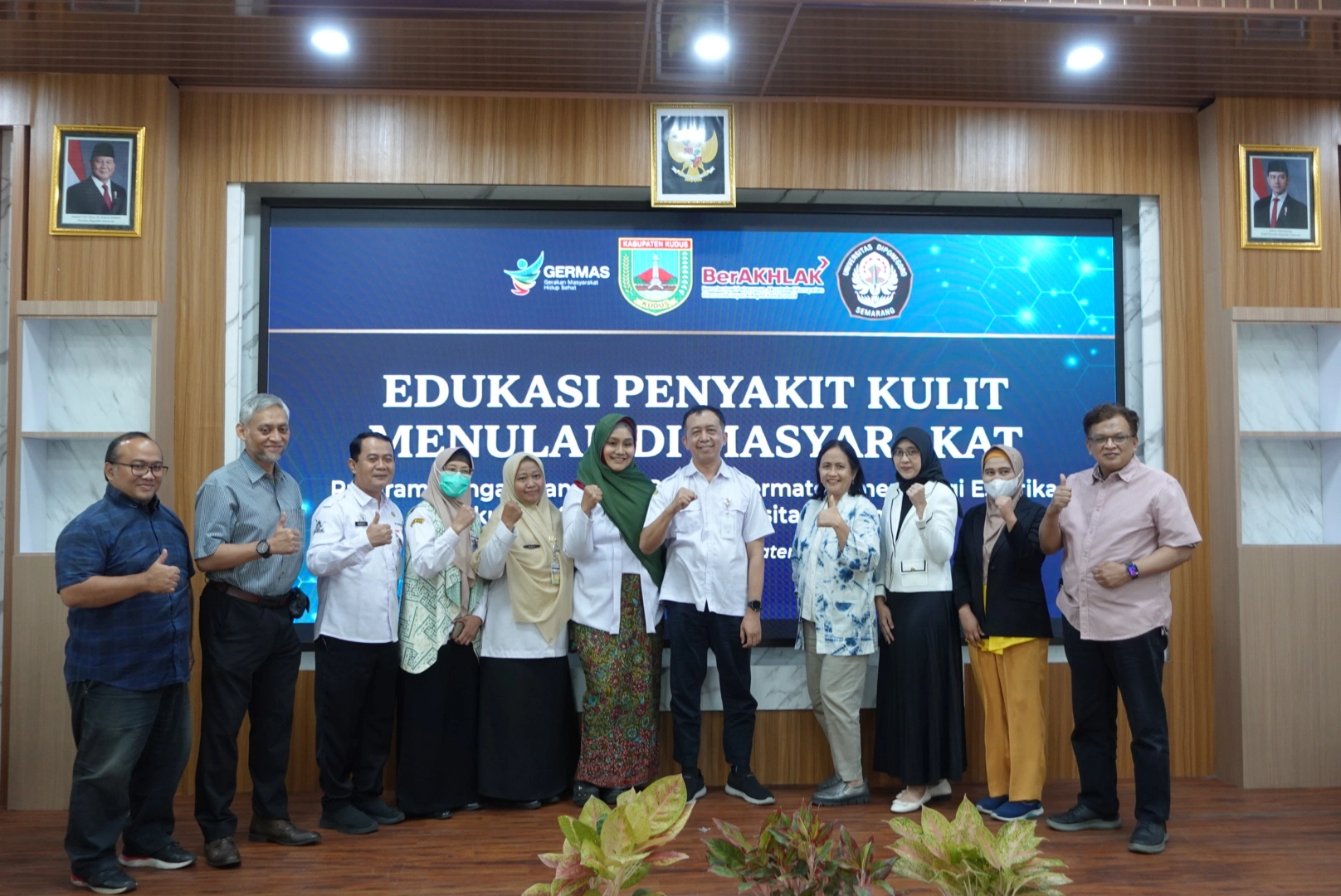
KUDUS — Universitas Diponegoro (Undip) Faculty of Medicine through its Department of Dermatology, Venereology and Aesthetics (DVE) conducted a community health outreach program at Kudus District Health Office on Wednesday (May 6, 2026), aimed at accelerating leprosy elimination efforts and improving the management of dermatological emergencies at the primary healthcare level.
The initiative brought together public health center workers, general practitioners, and community health volunteers to strengthen early detection systems, public education, and treatment capacity for infectious skin diseases in the region.
Head of the Department and Study Program of Dermatology, Venereology and Aesthetics at Faculty of Medicine Undip, dr. Buwono Puruhito, Sp.DVE, M.Biomed., said the program reflects the university’s commitment to the Tri Dharma of Higher Education through direct community engagement.
“Community service is one of the main pillars of the Tri Dharma of Higher Education. This activity reflects the commitment of the Dermatology and Venereology Department of Faculty of Medicine Undip not only to excel in education and research, but also to make a tangible contribution to improving public health,” said dr. Buwono.
Kudus District Health Office Head, Dr. dr. Abdul Hakam, M.Si.Med., Sp.A., welcomed the collaboration, emphasizing the importance of strengthening local healthcare capacity in tackling skin-related diseases.
“With a better understanding of leprosy and dermatological emergencies, we believe early case detection rates will improve and patient management at the primary healthcare level will become more effective,” he said.
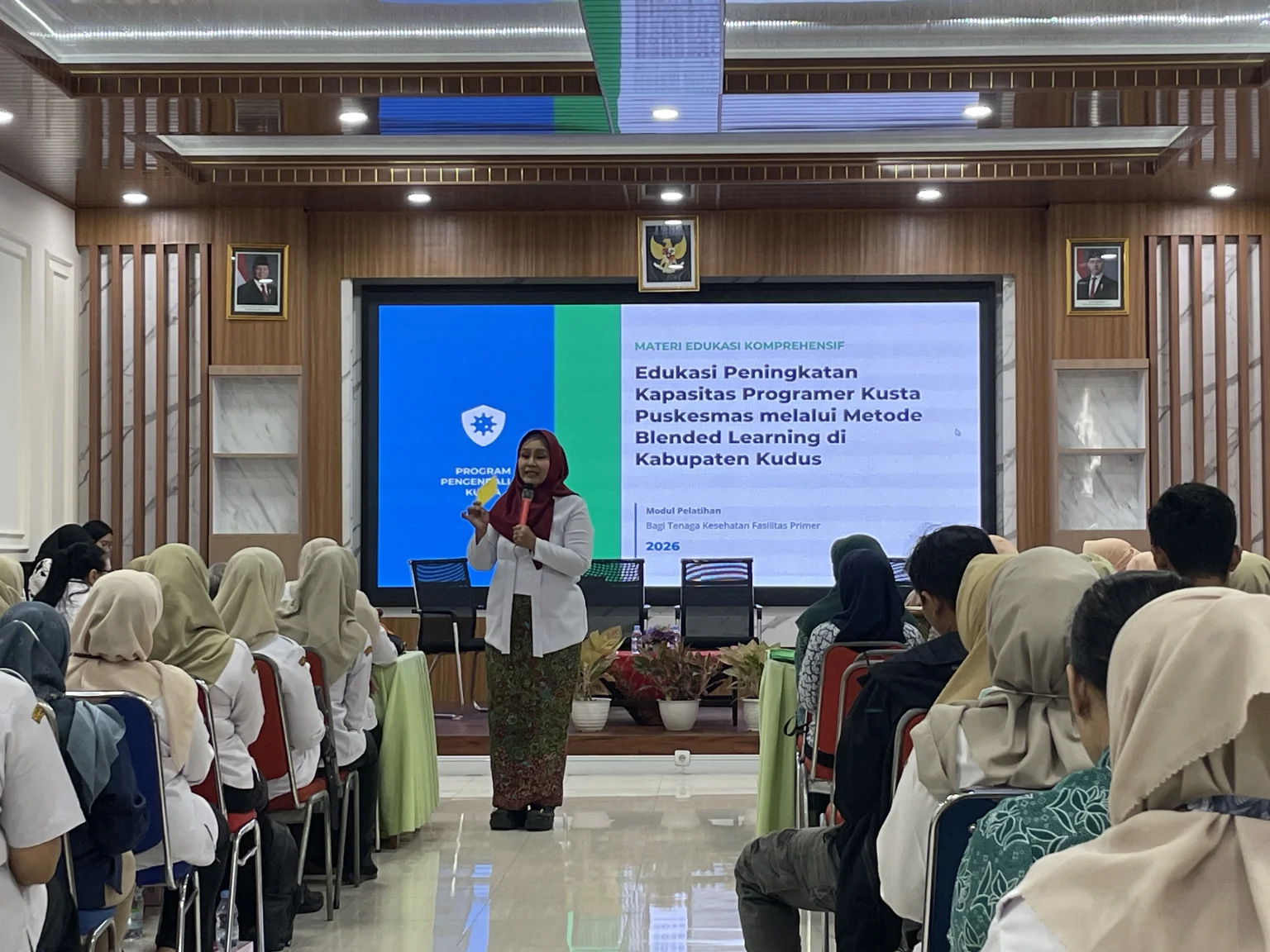
One of the key sessions focused on enhancing the capabilities of leprosy program coordinators at community health centers through a blended learning approach. The session was led by Dr. dr. Renni Yuniati, Sp.DVE., Subsp.DT., M.H., who highlighted the ongoing social stigma surrounding leprosy cases in Indonesia.
“The main challenge in leprosy management today is not the lack of medication, but the persistent stigma and discrimination within society. Many patients hide their condition and only seek treatment after developing disabilities,” said dr. Renni.
Community health volunteers participating in the program were also trained to conduct active case finding, assist patients as medication supervisors, and educate residents that leprosy is curable and significantly less contagious once treatment begins.
Another major session addressed dermatological emergencies among general practitioners. Dr. dr. Puguh Riyanto, Sp.DVE., Subsp.Ven., warned about the dangers of self-medication and the misuse of drugs without medical supervision.
“Many skin emergency cases occur because patients consume medication carelessly without proper allergy history documentation. Through this training, general practitioners are equipped with initial treatment algorithms and appropriate referral criteria,” explained dr. Puguh.
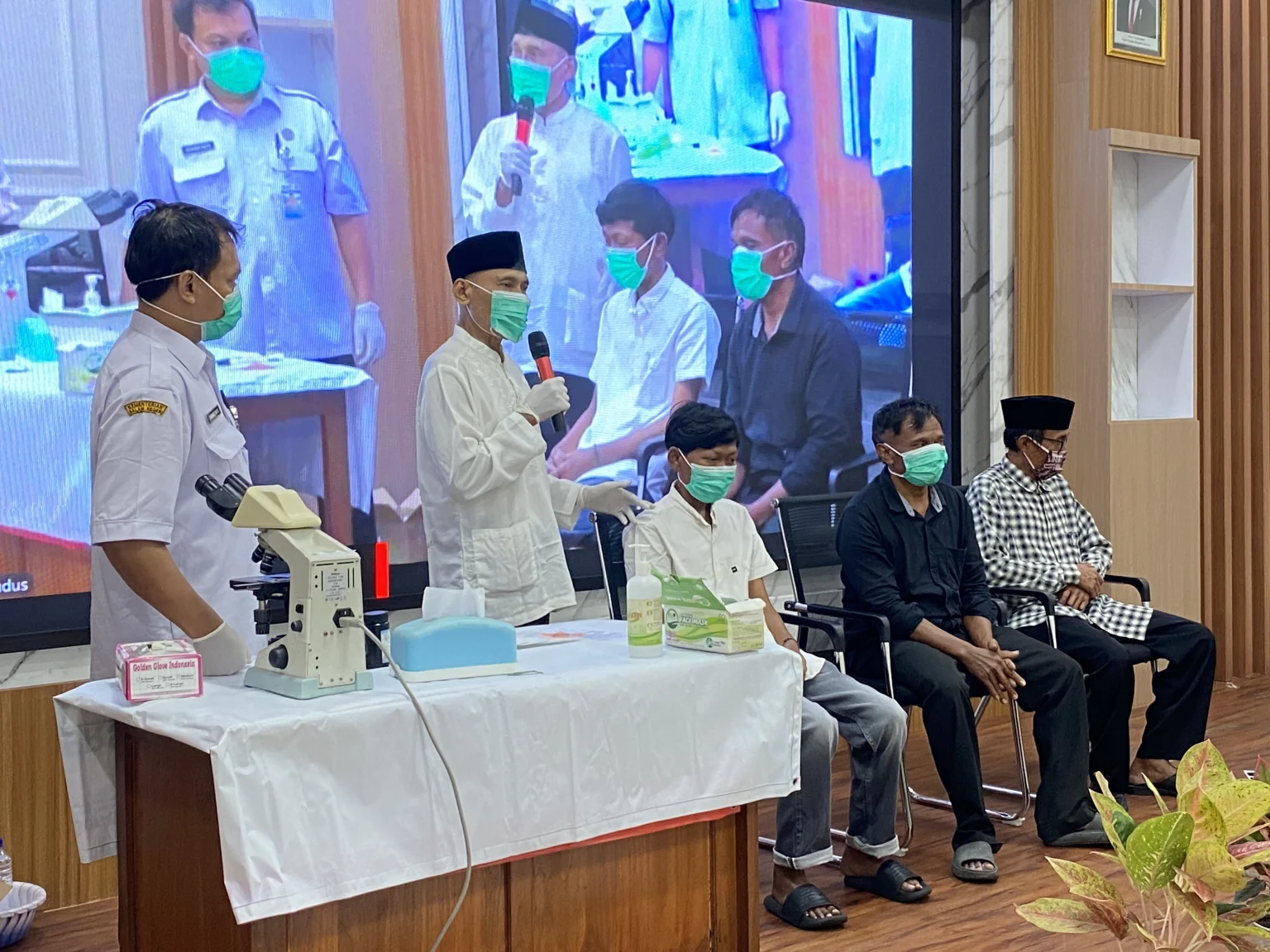
The Faculty of Medicine Undip medical team also provided educational sessions on infectious skin diseases such as scabies, fungal infections, and pyoderma. The presentation was delivered by Dr. dr. Radityastuti, Sp.DVE., Subsp.DA., FINSDV., FAADV., who noted that preventive education remains crucial in Kudus Regency, home to more than 200 Islamic boarding schools where crowded living conditions can increase the risk of disease transmission.
Through the outreach initiative, Faculty of Medicine Undip reaffirmed its commitment to strengthening public healthcare services through preventive and promotive education, while fostering collaboration between universities, healthcare workers, and local governments in supporting leprosy elimination and improving dermatological healthcare in Indonesia. (*)