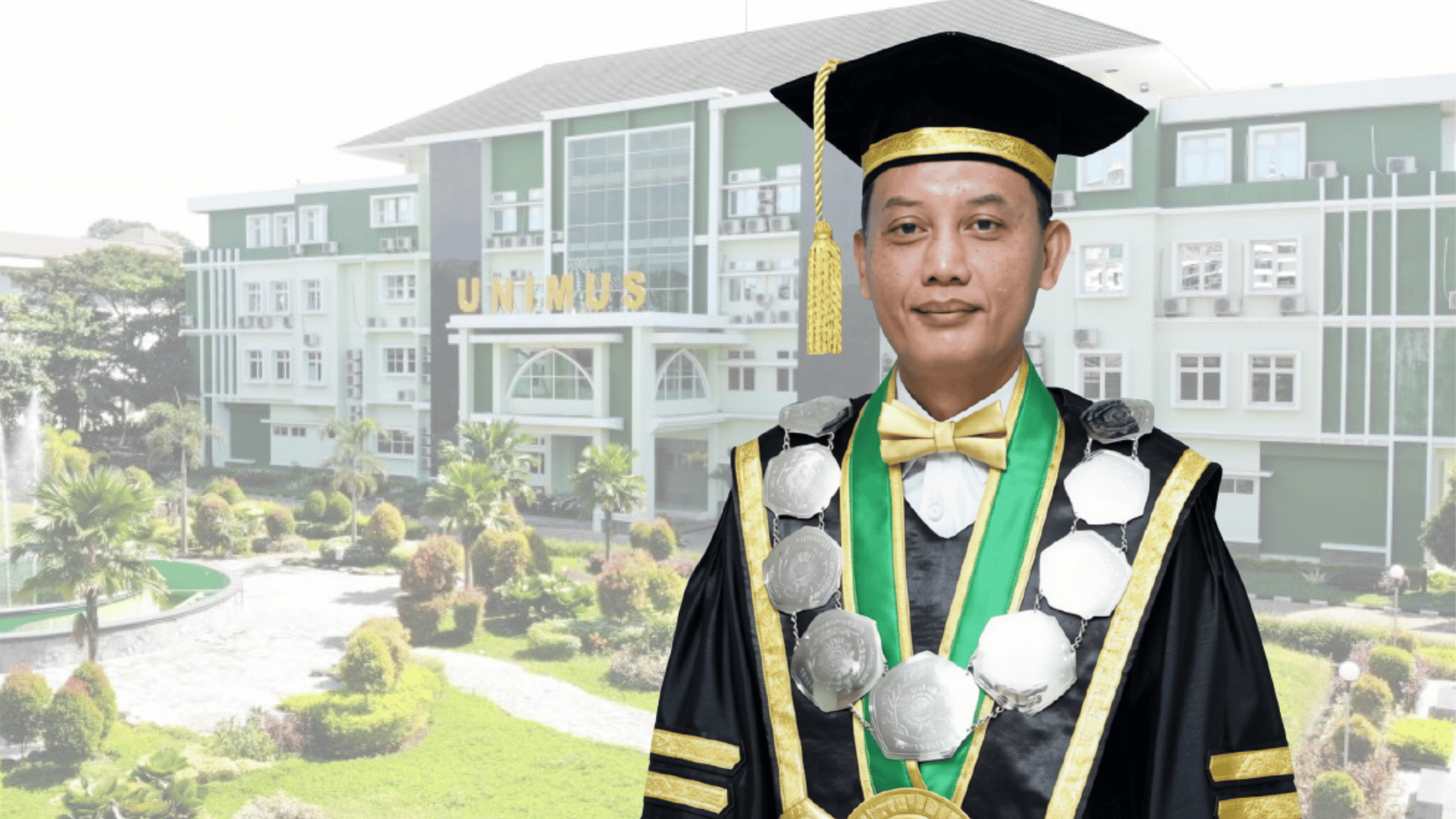
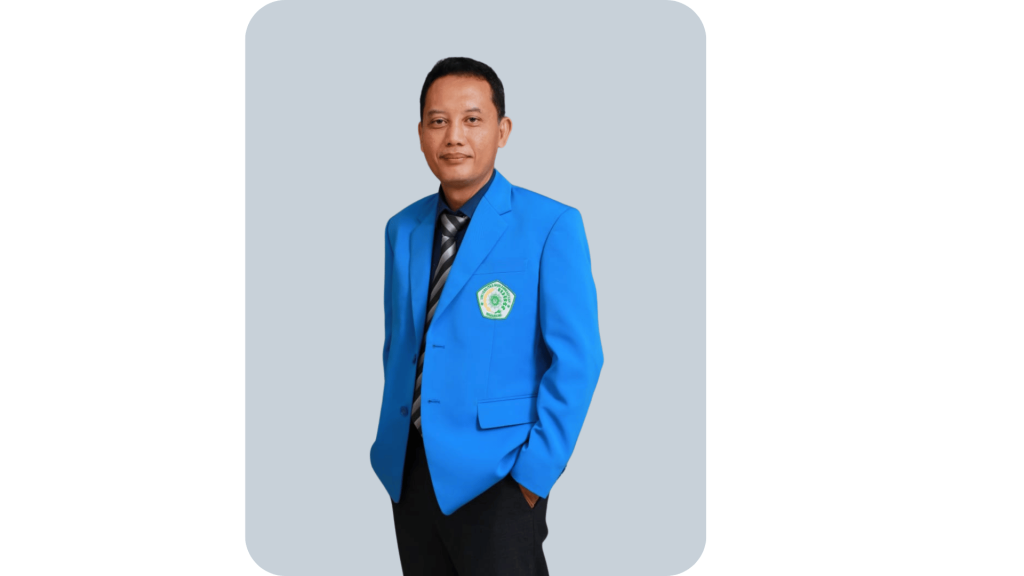
SEMARANG – “When I am in front of my promoter, I am a student. I set aside all my positions. I come to learn and seek guidance.” This statement reflects one of the key lessons from the academic journey of Prof. Budi Santosa, an alumnus of the Doctoral Program in Medical and Health Sciences (DIKK), Faculty of Medicine Universitas Diponegoro. His journey demonstrates that academic success is shaped not only by intellectual ability, but also by discipline, the courage to learn, effective time management, family support, and a commitment to continuous development.
Prof. Budi’s educational journey did not begin through an easy path. He started with a Diploma III in Medical Laboratory Technology before continuing his education to the master’s and doctoral levels. Each stage presented different challenges, but those experiences helped build the perseverance that eventually led him to the highest academic rank as a professor.
Berawal dari Magister Biomedik
Prof. Budi’s interest in academia grew further when he pursued a Master’s degree in Biomedical Sciences. With a background in Medical Laboratory Technology, he acknowledged that adapting to the field of biomedical sciences was not easy. During this period, the support of lecturers and professors played an important role in helping him complete his studies.
Prof. Budi recalled how his supervisors and lecturers provided intensive guidance and encouragement throughout the program. With their support, he completed his master’s degree in approximately two years, even finishing in less than two years. This experience later became an important foundation for his decision to pursue doctoral studies.
Pesan Rektor yang Mengubah Perjalanan Akademik
After completing his master’s degree in 2009, Prof. Budi was entrusted with serving as Head of the Applied Bachelor’s Program in Medical Laboratory Technology. Despite his demanding structural responsibilities, he continued to make time for learning.
One day, while studying on his laptop in his office, he did not realize that the university rector was standing behind him. Upon learning that Prof. Budi had completed his master’s degree, the rector delivered a simple yet decisive message: “Don’t stop. Continue directly to a doctoral degree.”
The message was followed by an opportunity for Prof. Budi to participate in a three-month English language enhancement program at Universitas Negeri Malang, on the condition that he continue his doctoral education.
Although he initially had concerns about the challenges of completing a doctoral program, Prof. Budi ultimately decided to continue his studies.
Overcoming Concerns About Doctoral Studies
Prof. Budi was admitted to the doctoral program in 2010, joining a cohort of 13 students. The early stages of his studies were accompanied by concerns. Stories about the difficulties of completing a doctoral degree weighed on his mind, and he had seen students from previous cohorts take years to finish their studies. Rather than allowing these stories to discourage him, Prof. Budi used them as motivation to complete his studies to the best of his ability. Interestingly, during his doctoral studies, he was entrusted with serving as Vice Dean for Academic Affairs. This added to the challenge, as he had to fulfill structural responsibilities while completing his doctoral degree. At this point, effective time management became essential.
In Front of My Promoter, I Am a Student
One of the principles that contributed to Prof. Budi’s success was his ability to establish clear priorities. Despite holding a structural position, he never placed his position above his academic responsibilities when engaging in the doctoral process. “When I am in front of my promoter, I am a student. I need his guidance. I set aside all my positions.”
This principle offers an important lesson for doctoral students who also have professional responsibilities or structural positions. According to Prof. Budi, individuals must be able to distinguish between their roles and give each responsibility the appropriate priority. When it is time to study, he must fully embrace his role as a student. When it is time to carry out his institutional responsibilities, he must fulfill them with full accountability.
The Courage to Ask and Move Forward
Throughout his doctoral education, Prof. Budi experienced various moments that strengthened his academic confidence. One occurred during a proposal development course. When the lecturer asked students to present their research ideas, the classroom initially fell silent. No one volunteered to come forward. Prof. Budi eventually decided to step up. The experience became an important lesson that, in academia, having the courage to try is better than simply waiting. He also received valuable guidance from professors regarding the direction of his research. One piece of advice that particularly stayed with him was to maintain continuity with the field he had studied previously.
“Don’t take a completely new direction. You will be jumping fields. Continue with what you studied in your master’s degree. There is still much to explore. You will eventually become an expert in that area.” The advice became the foundation for Prof. Budi to maintain academic and scientific continuity throughout his career.
Completing the Doctoral Degree in Three Years
Through discipline, support from his promoter, and effective time management, Prof. Budi successfully completed his doctoral studies on 17 December 2013, after approximately three years of study. The achievement was particularly significant because he continued to carry various structural responsibilities at his institution throughout his doctoral education. After completing his degree, Prof. Budi returned to campus and continued his service full-time. His academic career continued to progress. After serving as Vice Dean, he was appointed Dean in 2016. In 2019, he was entrusted with serving as Vice Rector for Academic Affairs, a position he subsequently held for two terms.
Maintaining Academic Engagement Amid Responsibilities
Holding a structural position naturally limited the time available for research and academic publications. However, Prof. Budi believes that an academic leader should not merely ask others to fulfill the university’s Tridharma responsibilities. “One cannot simply talk and tell others what to do. If I ask my colleagues to carry out the Tridharma of Higher Education properly, I must also set an example.” For this reason, he continued to engage in research, publications, community service, and other academic activities.
One strategy he adopted was building research collaborations. Prof. Budi recognized that limited time could be addressed through collaboration with colleagues in related and interdisciplinary fields. These collaborations subsequently created opportunities to obtain research grants and produce scientific publications.
The COVID-19 Pandemic and a Momentum for Writing
Interestingly, one of the key turning points in Prof. Budi’s publication journey occurred during the COVID-19 pandemic. As work shifted to a work-from-home arrangement, he had more time to revisit documents, data, and research findings that had previously not been developed into publications. He began preparing several scientific articles, some of which were subsequently published and contributed to his academic career. Ultimately, these efforts contributed to Prof. Budi’s appointment as a professor in 2023. The achievement was particularly meaningful because he had previously never imagined reaching such a position.
“I knew my own background. My education started with a Diploma III. I never imagined that I would become a professor.” His journey demonstrates that one’s educational background does not have to define the limits of future achievement. The willingness to continue learning and developing can open new possibilities.
Family: The Greatest Source of Strength
Behind this long academic journey was the significant role of his family. Prof. Budi expressed his gratitude for the support of his wife and two children. His wife does not have a career in the conventional sense of formal employment. However, in his words, “her career is 24 hours,” referring to her continuous role in supporting the family and his academic journey. His two children also understood their father’s demanding schedule. His eldest child has become a dentist, while his younger daughter is pursuing studies in psychology. During his professorial inauguration, Prof. Budi’s family openly acknowledged that his time at home had often been limited. Even when at home, he frequently continued working on his laptop. Nevertheless, their understanding and support became a source of strength that helped Prof. Budi continue fulfilling his responsibilities. “I am very grateful for the support of my family and children.” For him, academic success is never the result of an individual effort alone. Behind it is a family that provides space, understanding, and support throughout the journey.
Advice for DIKK Doctoral Students
When asked about advice for students in the Doctoral Program in Medical and Health Sciences (DIKK) at FK UNDIP, Prof. Budi shared several key messages. First, make doctoral education a priority. Professional responsibilities and structural positions should not cause doctoral studies to become a secondary priority. Students must manage their time effectively and devote serious attention to their academic process. Second, do not be afraid to ask questions and remain open to feedback. According to Prof. Budi, having the courage to ask promoters, lecturers, senior academics, and peers is an essential part of the learning process.
Third, maintain scientific continuity. Prof. Budi’s experience shows that continuity between previous educational stages can provide a strong foundation for developing expertise. Fourth, build collaborations. Research does not always have to be conducted independently. Collaboration with researchers and academics can create opportunities for research, grants, publications, and broader scientific development.
Fifth, do not overlook family support. Doctoral education requires considerable time and energy. Family support can be one of the greatest sources of strength for persevering and completing the program.
A Message for the DIKK Program: Alumni as Strategic Partners
For Prof. Budi, alumni also play an important role in the development of the academic program. The experiences of alumni who have directly engaged with communities and professional environments can provide valuable input for curriculum development, workshops, research, and other academic activities. In his view, alumni are not merely part of the program’s history but can also serve as strategic partners in strengthening education and research. He also highlighted the importance of developing research facilities within the university so that students do not always have to seek external facilities to support their research. By optimizing available facilities and resources, students can conduct research more effectively while strengthening the university’s broader research ecosystem.
A Journey That Inspires
The journey of Prof. Dr. Budi Santosa demonstrates that academic success does not always emerge from an easy path. Starting with a Diploma III, continuing to master’s and doctoral education, taking on various structural responsibilities, remaining active in research and publications, and ultimately being inaugurated as a professor were achievements built through a long and consistent process. His journey offers many lessons: having the courage to take the first step, remaining willing to learn, maintaining scientific continuity, managing time effectively, building collaborations, respecting academic supervisors, and never forgetting the support of family.
For the Doctoral Program in Medical and Health Sciences at FK UNDIP, the success of alumni such as Prof. Budi Santosa represents an important part of the institution’s journey and a source of pride. Alumni achievements are not merely personal accomplishments. They also reflect the educational process they experienced and provide inspiration for future generations of DIKK students. Ultimately, an academic journey is not simply about earning degrees. It is about ensuring that knowledge, experience, and responsibility continue to create meaningful contributions to institutions, communities, and future generations.
Success Story Alumni DIKK FK UNDIP
Keep learning, keep creating, and keep making a difference.