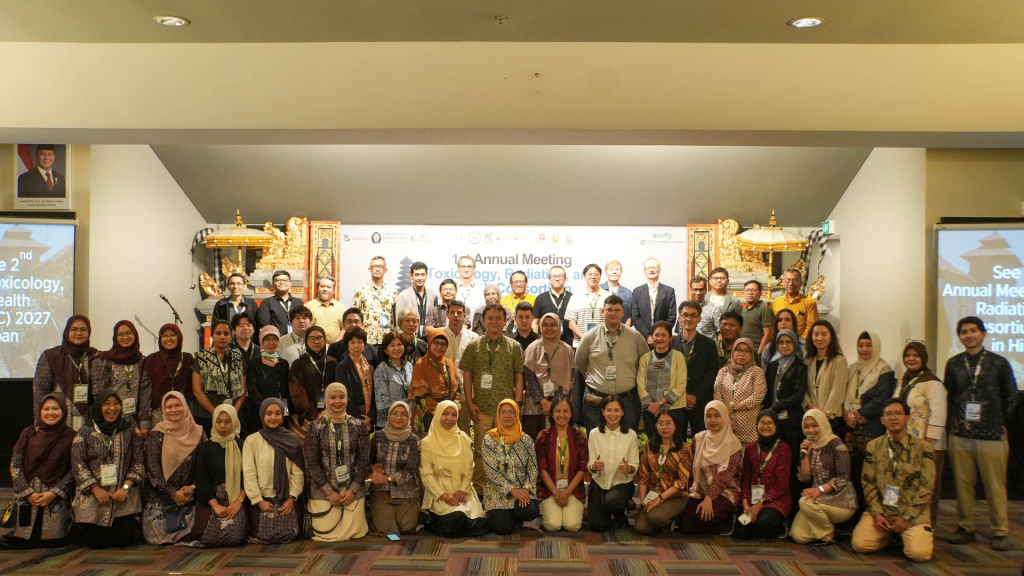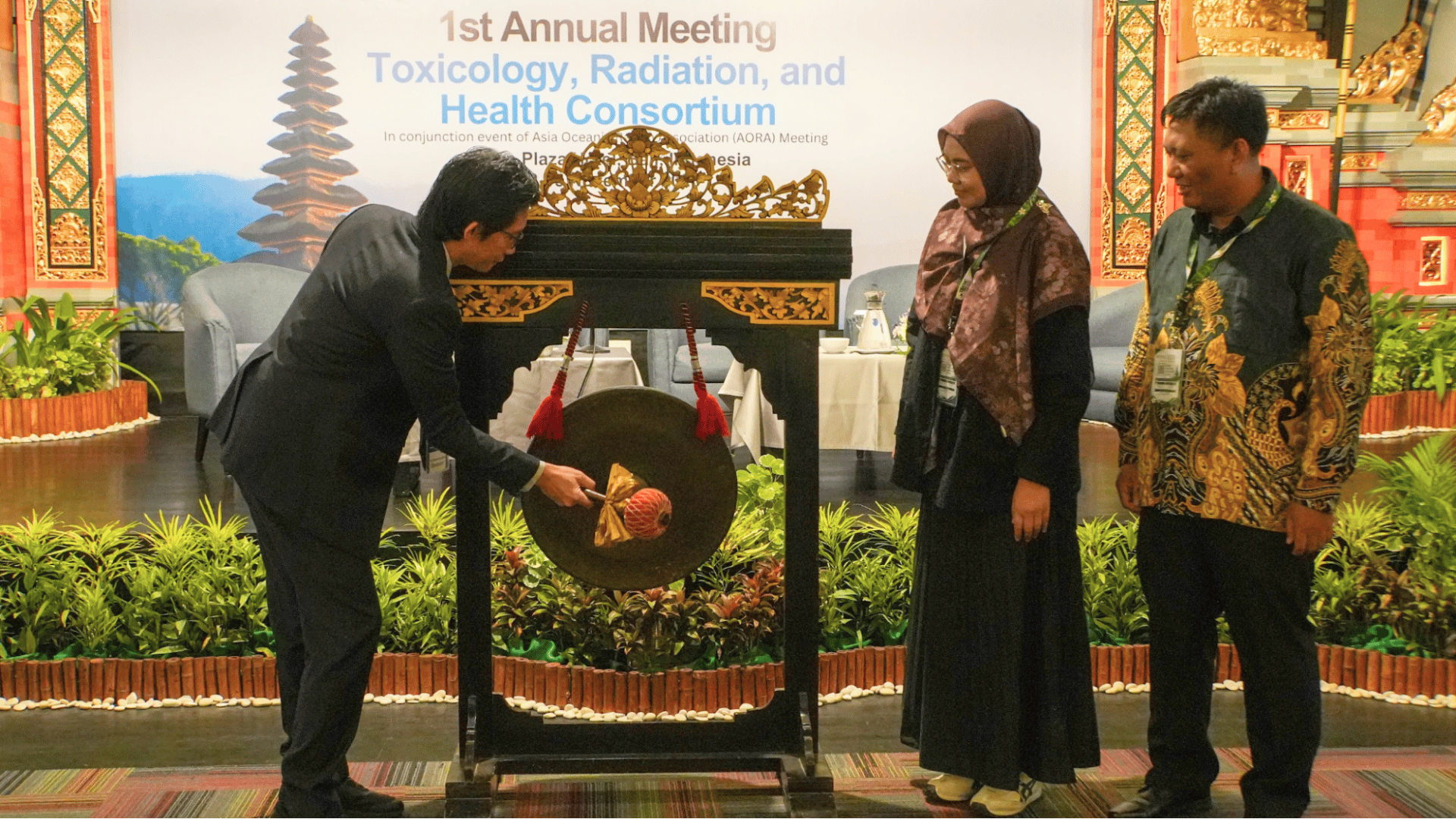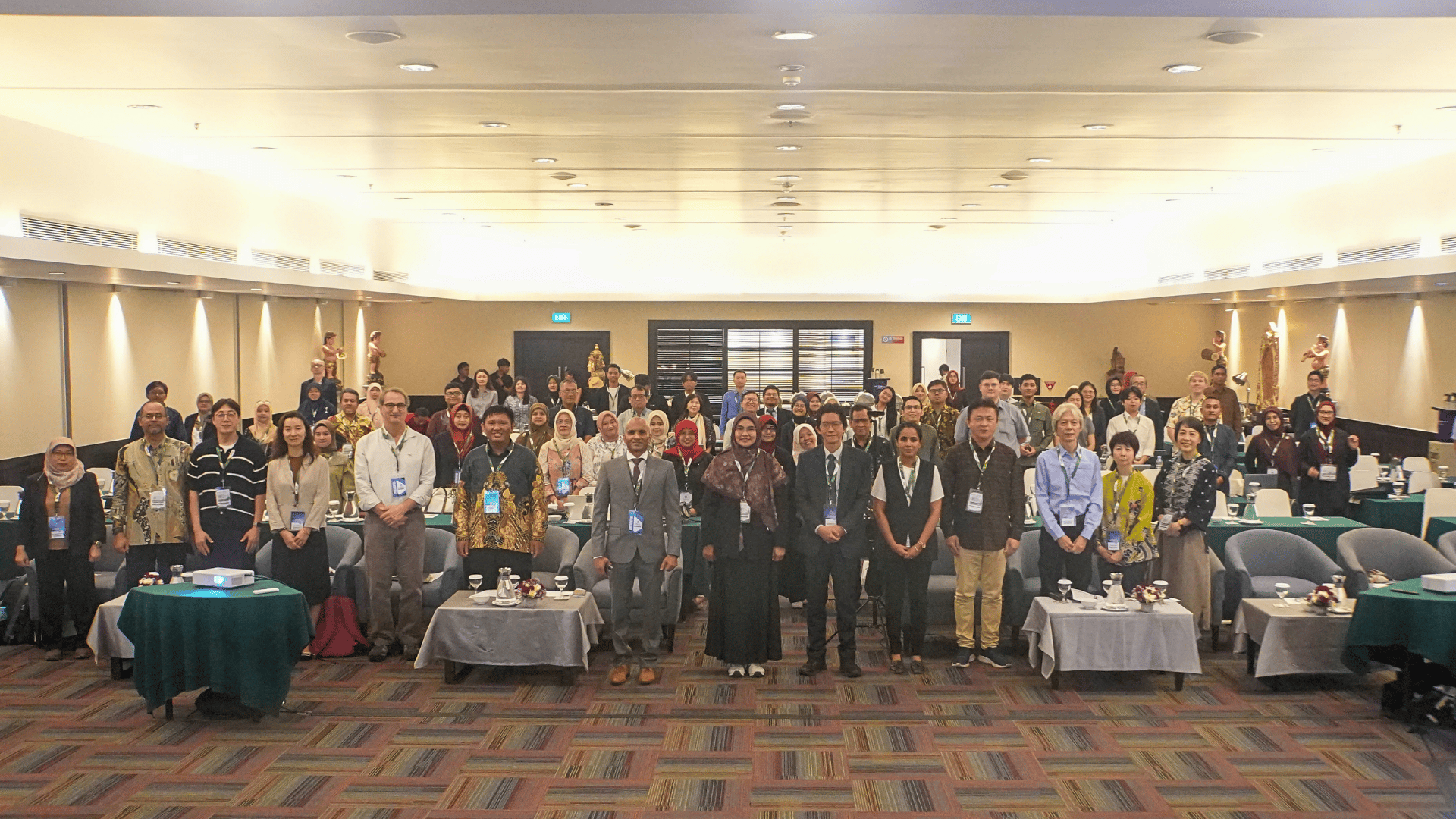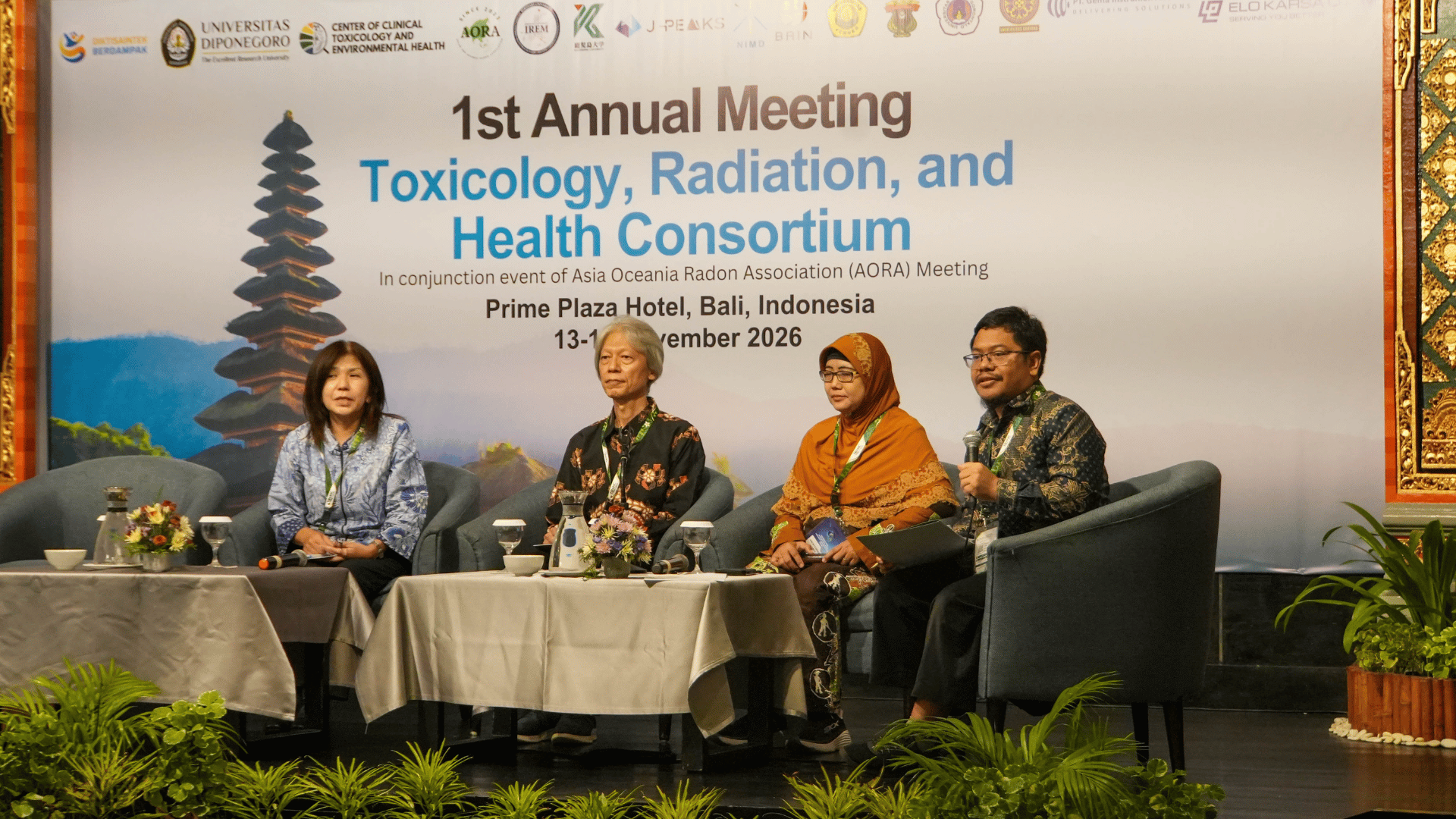
BALI — The health risks posed by exposure to mercury, radioactivity, and microplastics were the main focus of discussions on the second day of the 1st Annual Meeting of the Toxicology, Radiation, and Health Consortium (TRaHC), held in Bali on Saturday, November 14, 2026. The international scientific forum, initiated by the Faculty of Medicine Universitas Diponegoro (FK UNDIP) in collaboration with the National Research and Innovation Agency (BRIN), brought together researchers and experts from various countries to discuss advances in toxicology, radiation, and environmental health research.
Held alongside the Asia Oceania Radon Association (AORA) meeting, the second day’s program featured three scientific sessions covering research findings on heavy metal exposure, radioactivity monitoring, and microplastic pollution. The discussions connected scientific findings with public health and environmental challenges facing communities.
Examining the Health Impacts of Mercury Exposure
The third session, titled “Current Perspectives on Mercury Toxicology and Environmental Health,” was moderated by dr. Saekhol Bakri, M.P.H., Ph.D., from Universitas Diponegoro. The session explored the effects of mercury exposure on human health and the environment.
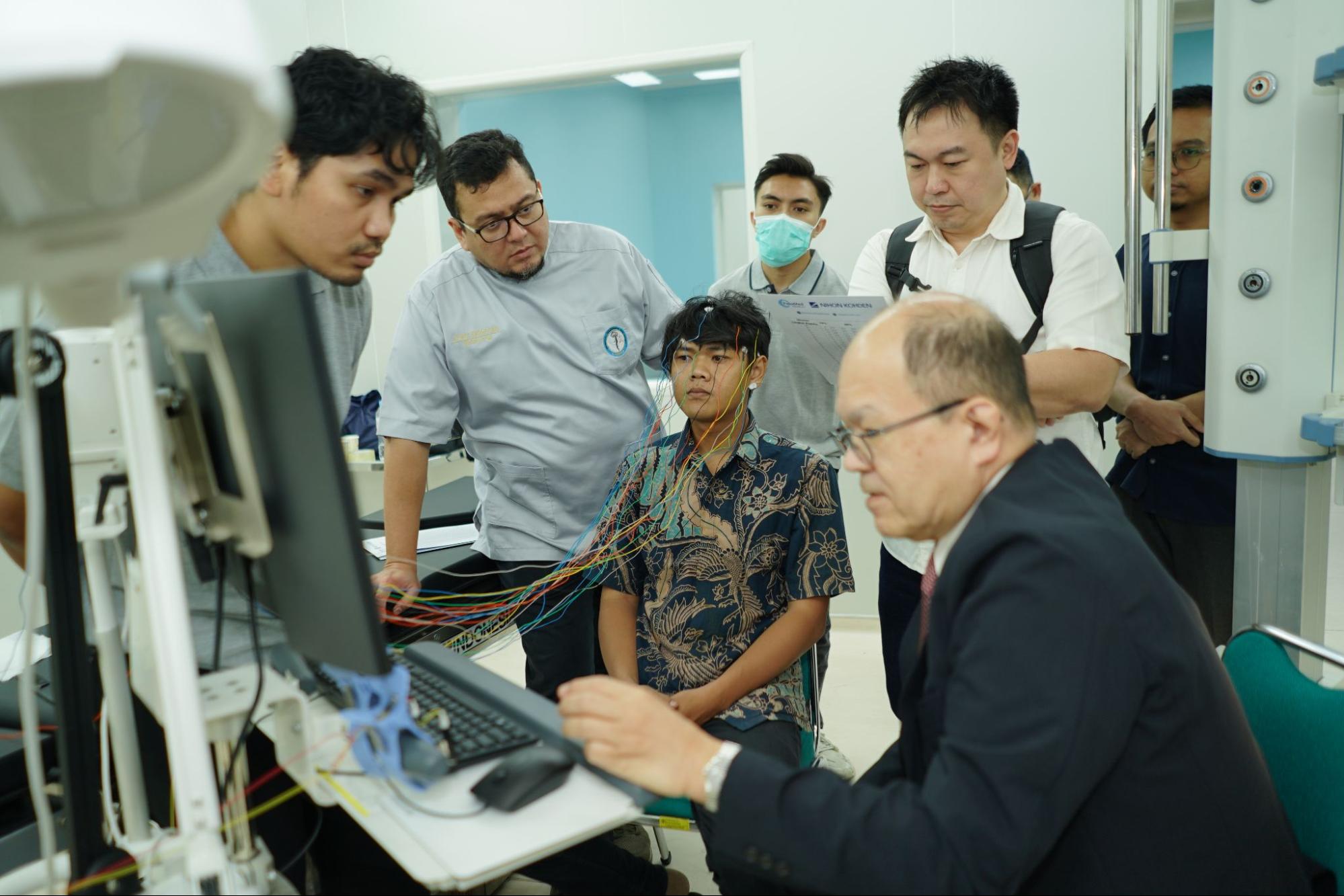
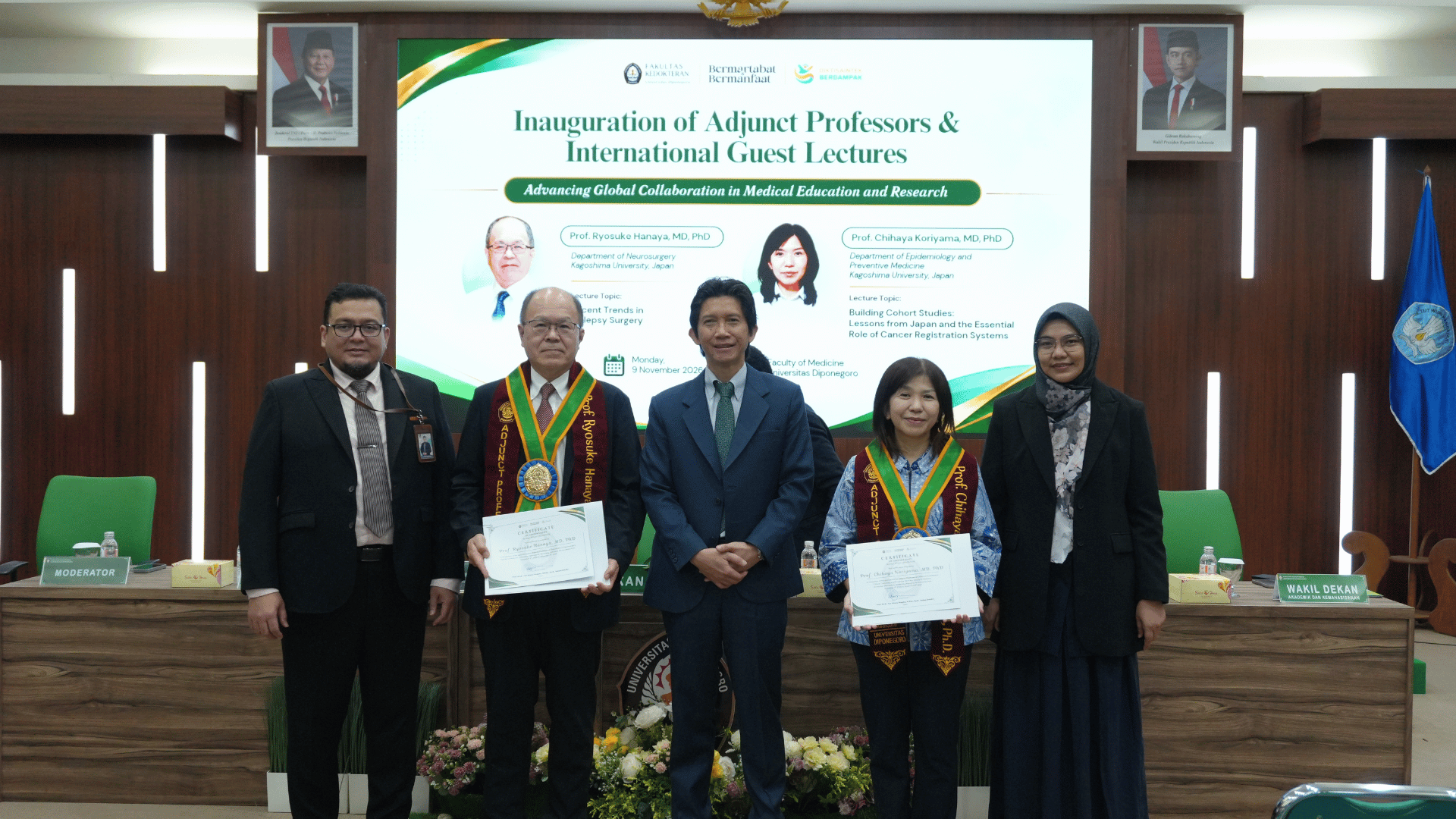
Prof. Chihaya Koriyama, M.D., Ph.D., from Kagoshima University, Japan, presented research on the association between mercury exposure and cardiovascular disease risk using the Cardio-Ankle Vascular Index (CAVI), a method for measuring arterial stiffness.
Meanwhile, Megumi Yamamoto, M.S., Ph.D., from the National Institute for Minamata Disease (NIMD), Japan, discussed the dynamics of mercury toxicology in the environment. Representing Indonesia, dr. Ancah Caesarina Novi M., Ph.D., FISPH., FISCM., from Universitas Jember, highlighted mercury contamination in well water and its association with chronic skin itching, known as pruritus.
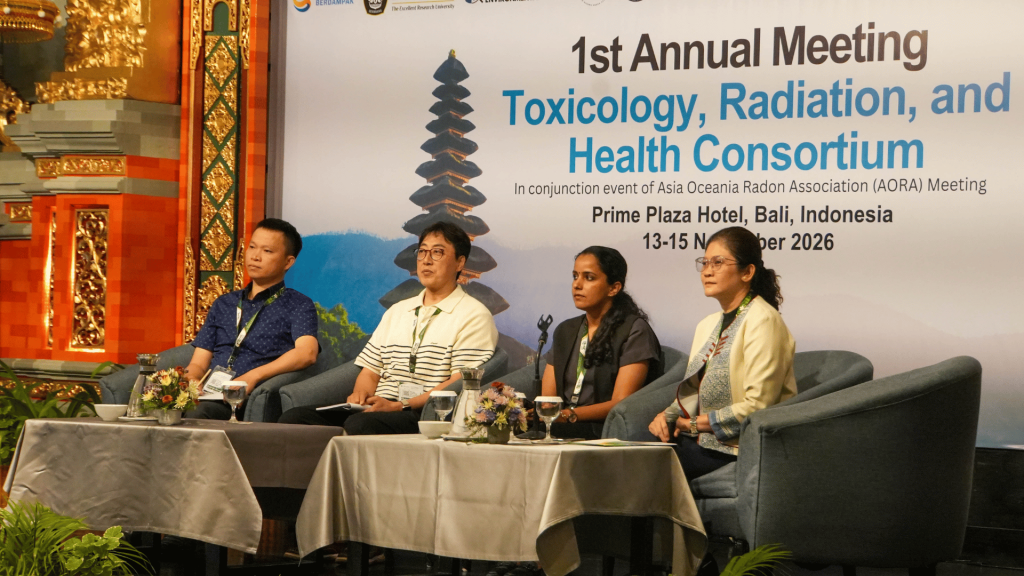
Monitoring Radioactivity in Seafood
The discussions continued with the fourth session, titled “Radioactivity and Radiation Protection,” moderated by Chutima Kranrod, Ph.D., from Hirosaki University. The session focused on monitoring radioactive substances and strengthening protection against radiation exposure.
Van-Hao Duong, Ph.D. (AORA), presented a study on the radiological risks associated with Polonium-210 concentrations in clams and oysters in Vietnam. Meanwhile, Prof. Hyuncheol Kim, Ph.D., from the Korea Atomic Energy Research Institute (KAERI), introduced analytical methods for detecting radioactive elements, including Tritium, Strontium-90, and Cesium-137, in seawater.
In the same session, Athira Nandakumar, M.Sc., Ph.D., from Kagoshima University, shared scientific evidence on the long-term health effects of high-dose natural radiation exposure among populations, drawing on findings from the Karunagappally Cohort study.
Exploring Microplastics and Heavy Metal Contamination
The fifth session was moderated by Dr. Leons Rixson, M.Si., from BRIN and addressed various pollutants affecting ecosystems and human health.
Prof. Hanqing Yu from the Chinese Academy of Agricultural Sciences (CAAS), China, presented a quantitative analysis of microplastic movement in agricultural soils caused by water erosion. Meanwhile, Prof. Dr. Ir. Etty Riani, M.S., from Institut Pertanian Bogor (IPB), presented findings on heavy metal accumulation in Black Panther snails in a former battery recycling area and its implications for food safety.
Representing Universitas Negeri Gorontalo, dr. Sri Manovita Pateda, Ph.D., presented a technology-based and community empowerment approach to reducing the risk of mercury vapor exposure through inhalation. This initiative represents one of the preventive measures to address health problems associated with mercury exposure.
Recognizing Researchers and Sustaining International Collaboration
In addition to the plenary sessions, participants presented their research findings through parallel oral presentations held in three rooms and poster presentations across two rooms. The research contributions were evaluated by a panel of judges representing diverse areas of expertise.
During the Closing Ceremony, hosted by Organizing Committee Chair dr. Muflihatul Muniroh, M.Si.Med., Ph.D., alongside Vice Chair Prof. Dr. Eka Djatnika Nugraha, S.Si., M.Hs., the committee announced the recipients of the Best Presentation Awards.
In the Best Oral Presentation category, Donovan Anderson, Ph.D., secured first place, followed by Prof. Hirofumi Tazoe in second place and Shiroh Tanoue, M.D., Ph.D., in third place. Meanwhile, the Best Poster Presentation category was led by dr. Alauna Rafi Faida in first place, followed by Ryohei Yamada, Muhammad Syifaul Afnan, S.Ked., and Adinda Tisha Desviana, S.T.
The closing program also featured a video address from BRIN Head Prof. Arif Satria, S.P., M.Si. In his remarks, he emphasized the importance of strengthening environmental data-based research, including expanding investigations into various substances, comprehensive contaminant quantification, and understanding their effects on human health.
He also highlighted the need to improve environmental safety and protection through enhanced measures to address future public health and environmental safety challenges.
“Strengthening environmental data research, including through comprehensive studies and quantification of contaminants, is an important step toward understanding the health risks associated with exposure. These efforts must be accompanied by improvements in environmental safety and protection to help us address future public health and environmental challenges,” Prof. Arif Satria stated in his video address.
As part of efforts to sustain international research collaboration, Prof. Shinji Tokonami, Ph.D., announced Hirosaki University, Japan, as the prospective host of the 2nd Annual Meeting of TRaHC in 2027. This commitment marks a further step toward strengthening research networks and cross-border cooperation in toxicology, radiation, and environmental health. (Humas FK UNDIP)