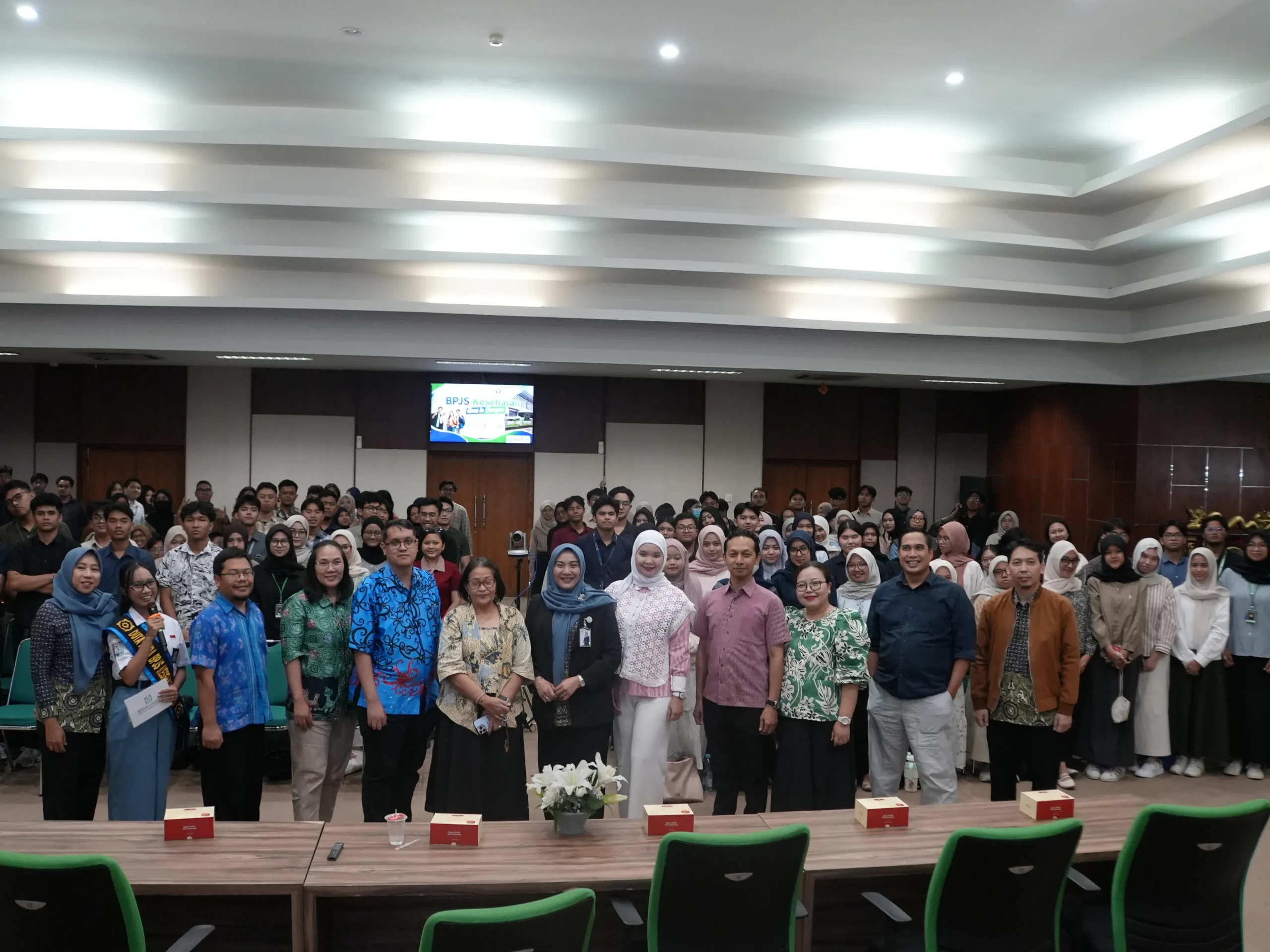
SEMARANG – The Faculty of Medicine, Universitas Diponegoro (FK Undip), has equipped students with comprehensive knowledge of the National Health Insurance System (JKN), healthcare financing mechanisms, and the challenges of healthcare service transformation through a guest lecture with BPJS Kesehatan. The event, held at the FK Undip Tembalang Campus on Tuesday (21/7/2026), was part of FK Undip’s efforts to prepare future doctors who are not only clinically competent but also understand national health policies and healthcare system governance.
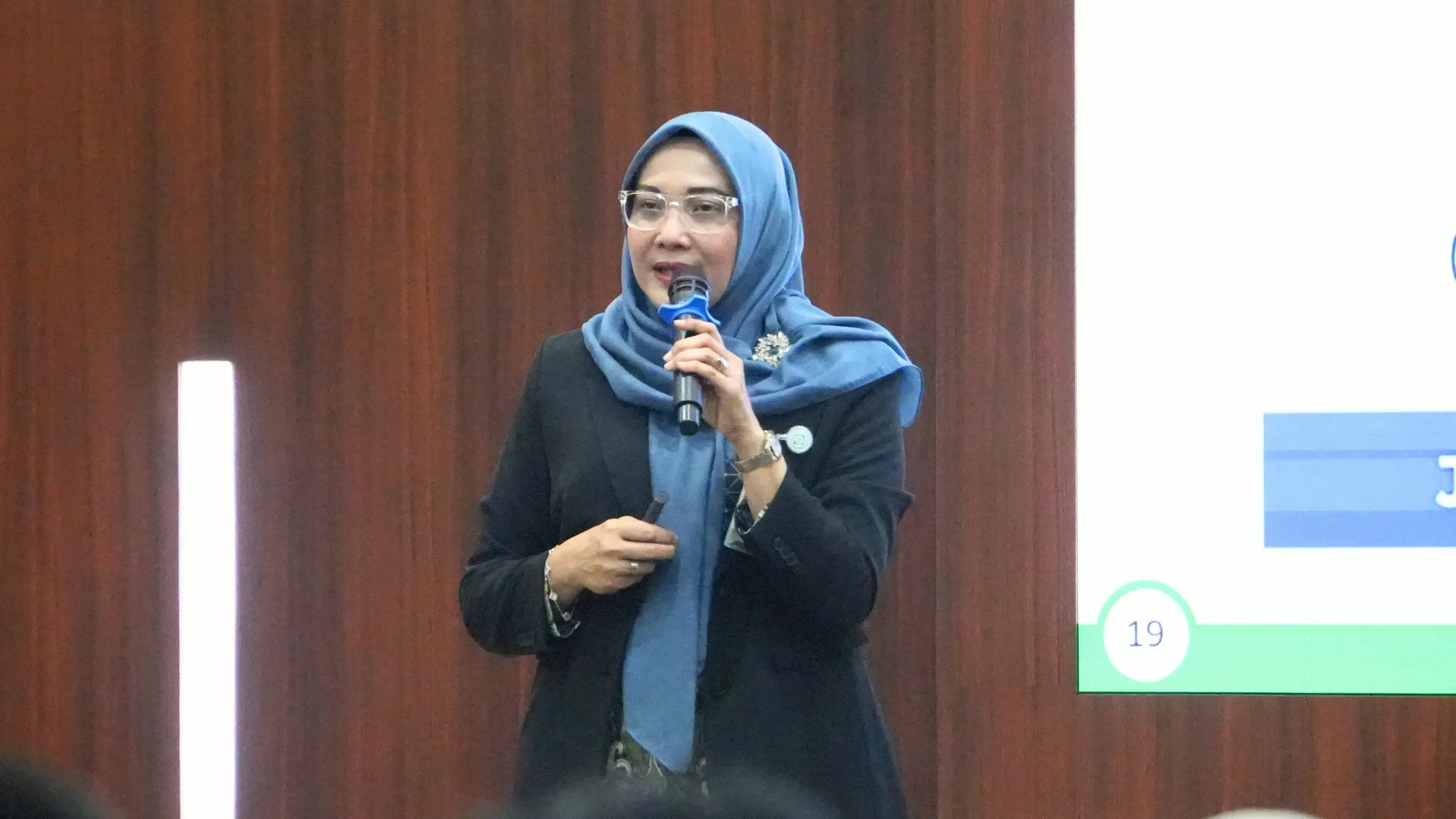
The guest lecture featured Debbie Nianta Musigiasari, S.Si., Apt., AAAK., Head of BPJS Kesehatan Semarang Branch, who delivered a presentation on the principles of JKN implementation, healthcare financing challenges, and the role of healthcare professionals in maintaining sustainable healthcare services for the community.
In her presentation, Debbie explained that JKN is built on the principle of mutual cooperation, where healthy participants contribute to financing healthcare services for participants who require medical assistance. According to her, the success of the JKN program greatly depends on broad participation coverage to create risk balance and ensure sustainable financing.
“The wider the participant coverage, the more accurate the prediction of health risks and the stronger the financial stability of the JKN program. Therefore, all Indonesian residents are required to become participants so that the principle of mutual cooperation can be implemented,” she explained.
In addition to explaining the healthcare financing mechanism, Debbie also discussed the current challenges faced by JKN, particularly the increasing financial burden caused by catastrophic diseases such as heart disease and kidney failure. She emphasized that system sustainability does not only depend on financing but also on improving service quality, maintaining active participation, and strengthening disease prevention efforts in the community.
During the discussion session, FK Undip students raised various issues, ranging from challenges in BPJS Kesehatan implementation, healthcare services for JKN participants, to the role of doctors in supporting the success of the national healthcare system. Responding to these discussions, Debbie emphasized that BPJS Kesehatan is committed to ensuring all participants receive fair services according to established standards without discrimination.

Through this activity, students gained insights into the interconnection between medical practice, health policies, and the national healthcare financing system. These valuable perspectives are expected to strengthen the readiness of FK Undip graduates in providing quality healthcare services while contributing to the improvement of Indonesia’s healthcare system. (Public Relations Office of FK Undip)