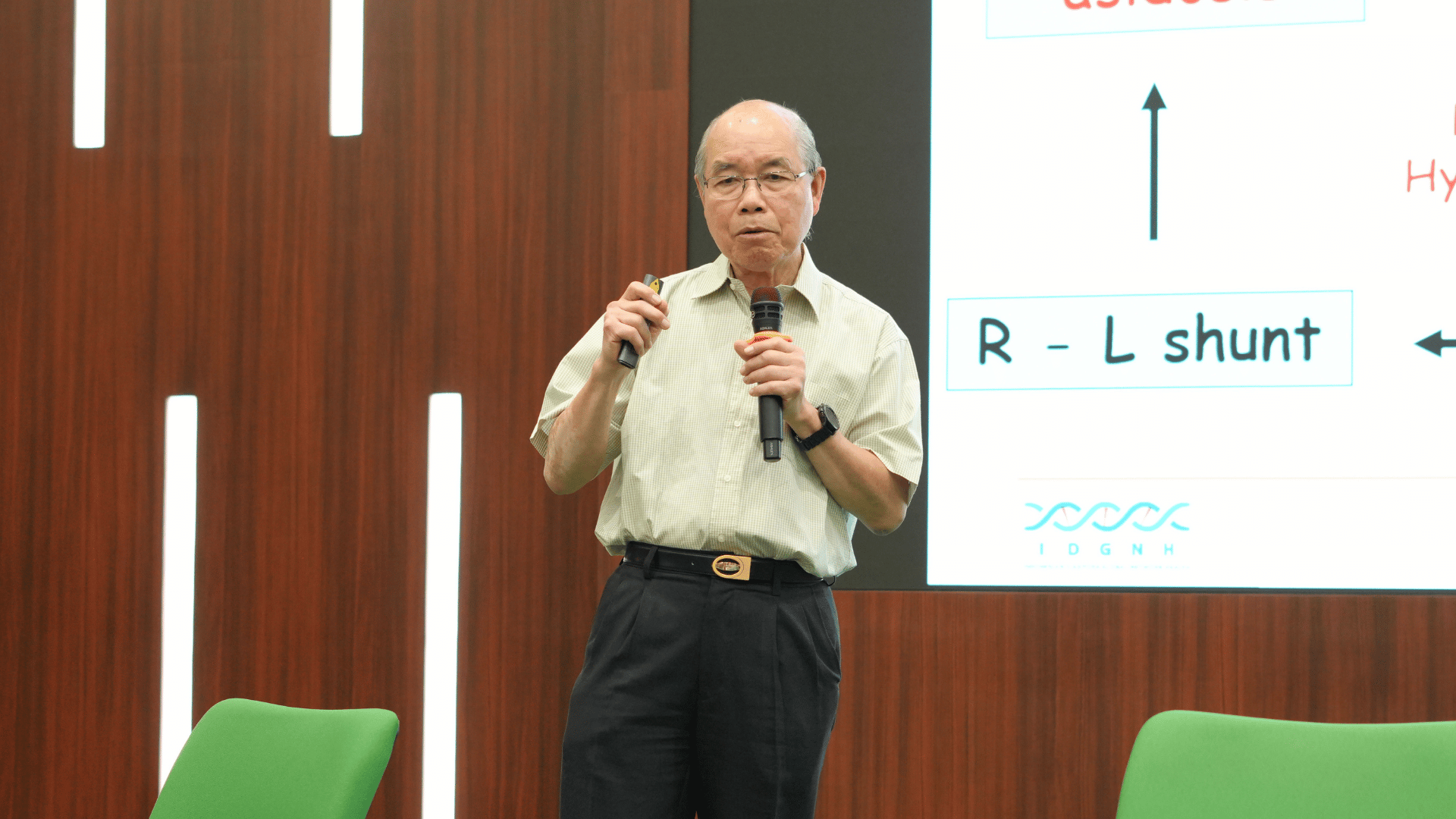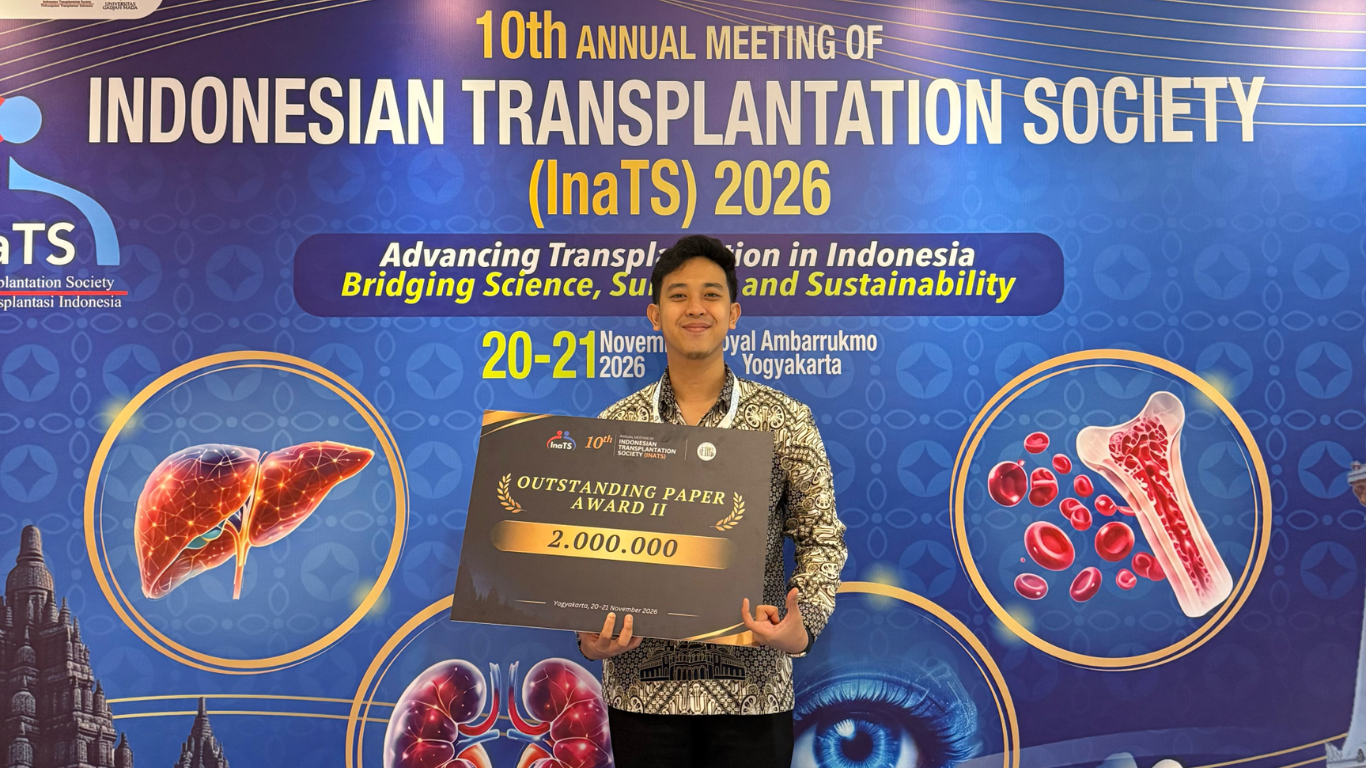
SEMARANG – dr. Muhammad Kemal Thariq Ibrahim, a student of the Urology Specialist Medical Education Program (Sp-1) at the Faculty of Medicine Universitas Diponegoro (FK UNDIP), has received the Outstanding Paper II award at the 2026 Scientific Competition of the Indonesian Transplantation Society (InaTS). The competition was held on November 20–21, 2026, at Royal Ambarrukmo Hotel, Yogyakarta, as part of the 10th Annual Meeting of the Indonesian Transplantation Society.
The award recognized his research entitled “Comparative Effectiveness of Continuous, End-Ischemic, and Sequential Machine Perfusion Strategies in Deceased-Donor Kidney Transplantation: A Systematic Review and Network Meta-Analysis.” The study examined the comparative effectiveness of various kidney preservation strategies before transplantation, particularly in reducing the risk of delayed graft function (DGF), a condition in which a transplanted kidney does not function optimally during the initial post-transplant period.
The research was motivated by the importance of maintaining donor kidney quality and viability from organ retrieval through transplantation. Ischemia-reperfusion injury during this process can increase the risk of DGF, potentially resulting in the need for dialysis after transplantation and longer hospital stays.
Based on an analysis of 14 randomized controlled trial reports, with 13 comparisons included in the main analytical network covering 2,614 transplant observations, the study found that conventional hypothermic machine perfusion (HMP) had the most consistent evidence for reducing DGF compared with static cold storage. This strategy demonstrated an approximately 24% relative reduction in DGF risk.
According to dr. Muhammad Kemal Thariq Ibrahim, the study’s strength lies in its Bayesian network meta-analysis approach, which enables simultaneous comparisons of multiple preservation strategies. The analysis also explored differences based on donor age, cold ischemia time, and donor source to provide a more comprehensive understanding of the effectiveness of each approach.
Research preparation began several months before the competition. Of all submitted abstracts, only 10 were selected for the oral presentation category. One of the main challenges was translating the methodological complexity and statistical findings of the network meta-analysis into clear clinical messages that could be understood by participants from various medical disciplines.
He emphasized that this achievement would not have been possible without the guidance and support of lecturers and teaching staff from the Urology Specialist Program at FK UNDIP. Their academic support and direction throughout the research and presentation preparation played an important role in his success.
“This award is a great honor and a meaningful milestone in my educational journey. However, I believe this recognition is not the end, but rather the beginning of the Urology Program at FK UNDIP’s contribution to research and scientific advancement,” he said.
Furthermore, the research is expected to contribute to the development of evidence-based kidney transplantation practices in Indonesia. Reducing DGF may help decrease the need for dialysis during the early post-transplant period, shorten hospital stays, and improve healthcare service efficiency. Its implementation, however, requires consideration of healthcare facilities, technology, funding, and the characteristics of the national transplantation system.
As a follow-up, the research team is committed to publishing its findings to ensure broader benefits for medical science. This achievement also serves as encouragement for students of the Urology Specialist Program at FK UNDIP to strengthen their research productivity, expand collaborations, and produce studies with meaningful impacts on healthcare services. (Humas FK UNDIP)