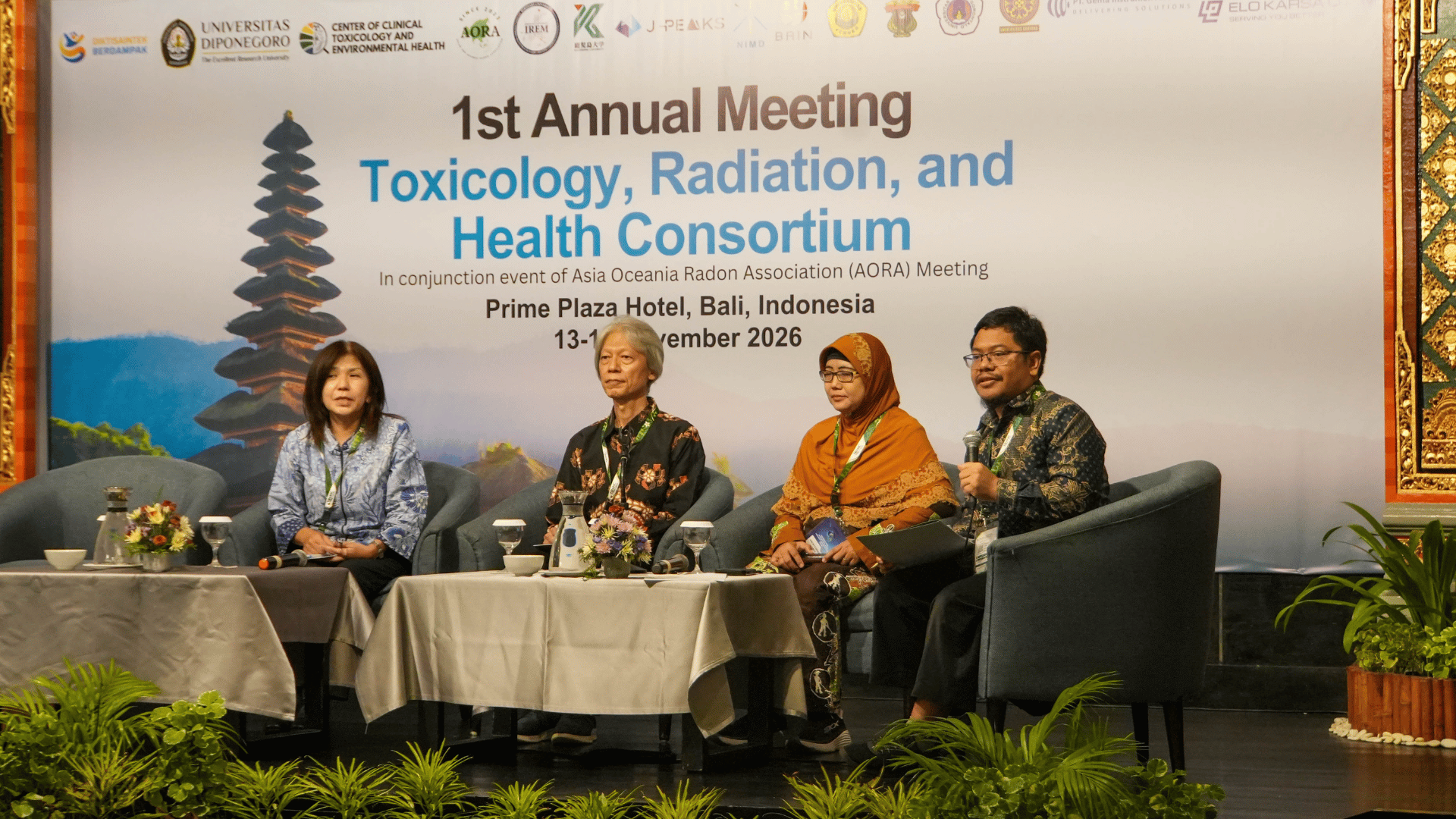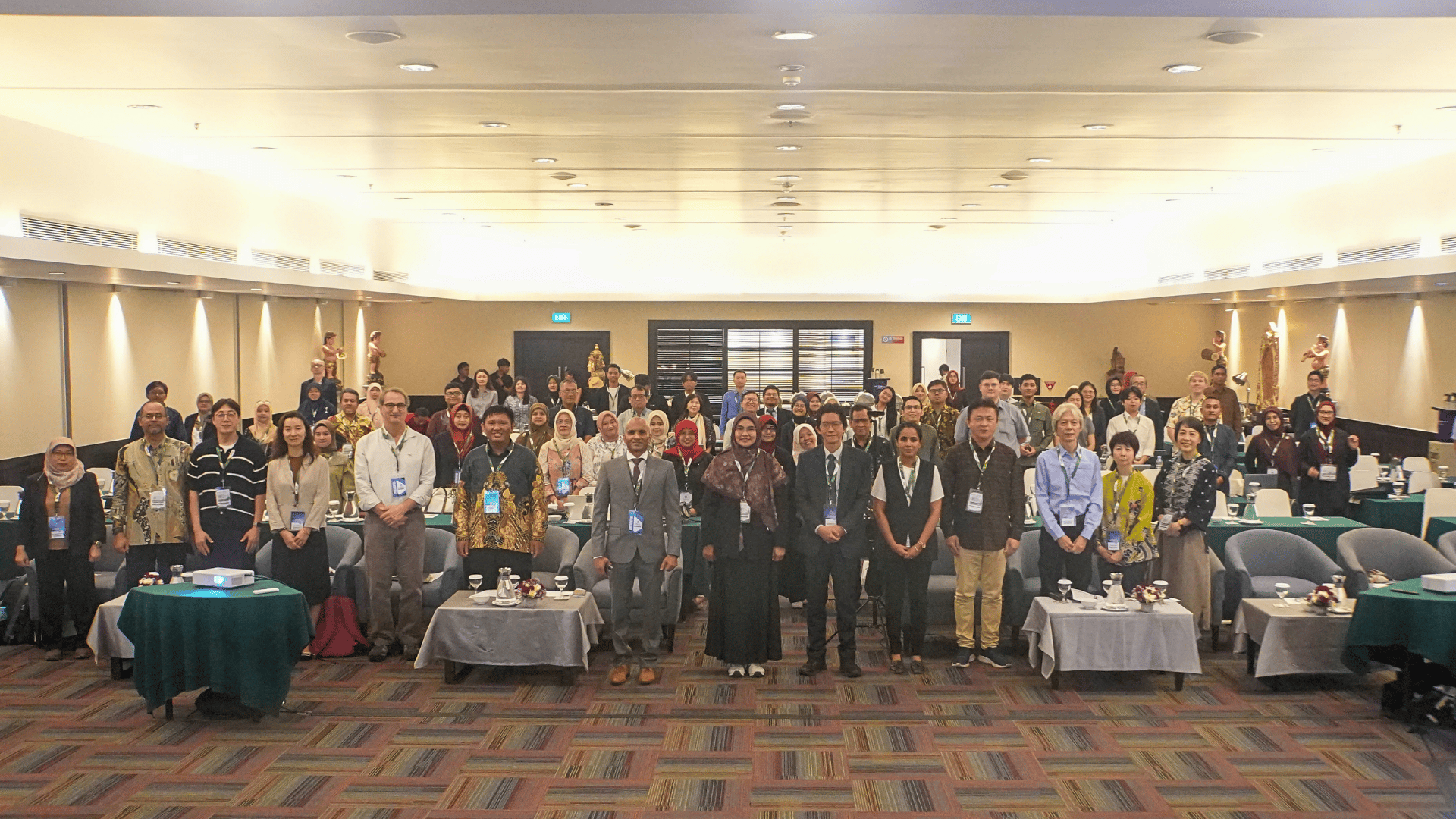
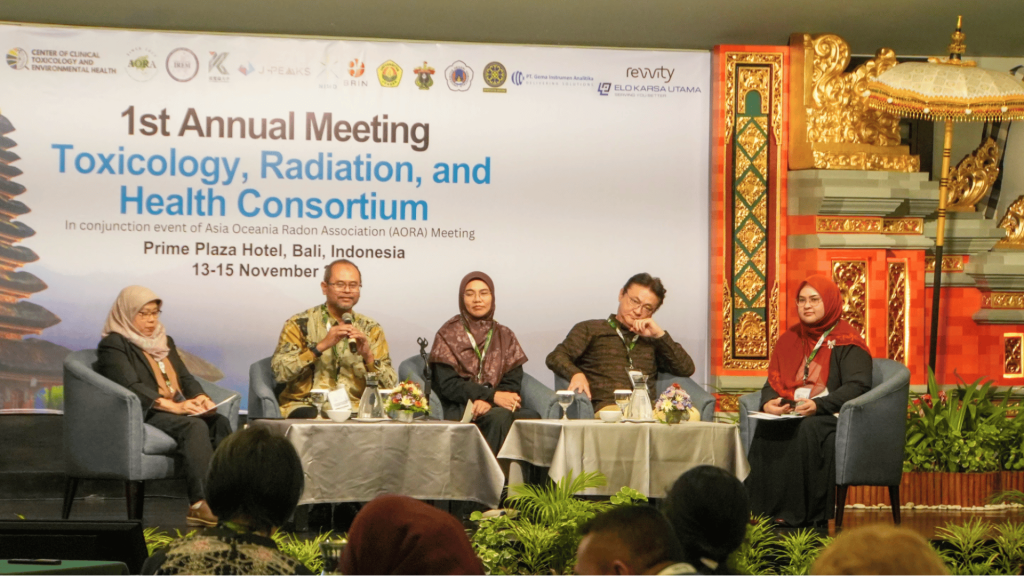
BALI – Exposure to natural radiation, radon gas, and heavy metals has become a growing concern among international researchers due to its potential long-term effects on public health. These issues were discussed by approximately 115 academics and researchers from seven countries at the 1st Annual Meeting of the Toxicology, Radiation, and Health Consortium (TRaHC), held in conjunction with the Asia Oceania Radon Association (AORA) meeting at Prime Plaza Hotel, Sanur, Bali, on Friday, November 13, 2026.
The international scientific forum, initiated by the Faculty of Medicine Universitas Diponegoro (FK UNDIP), brought together experts to discuss advances in toxicology, radiation, and public health research. Particular attention was given to the risks of hazardous substance exposure among vulnerable populations, especially pregnant women and children, while promoting the use of research findings to strengthen public health protection.
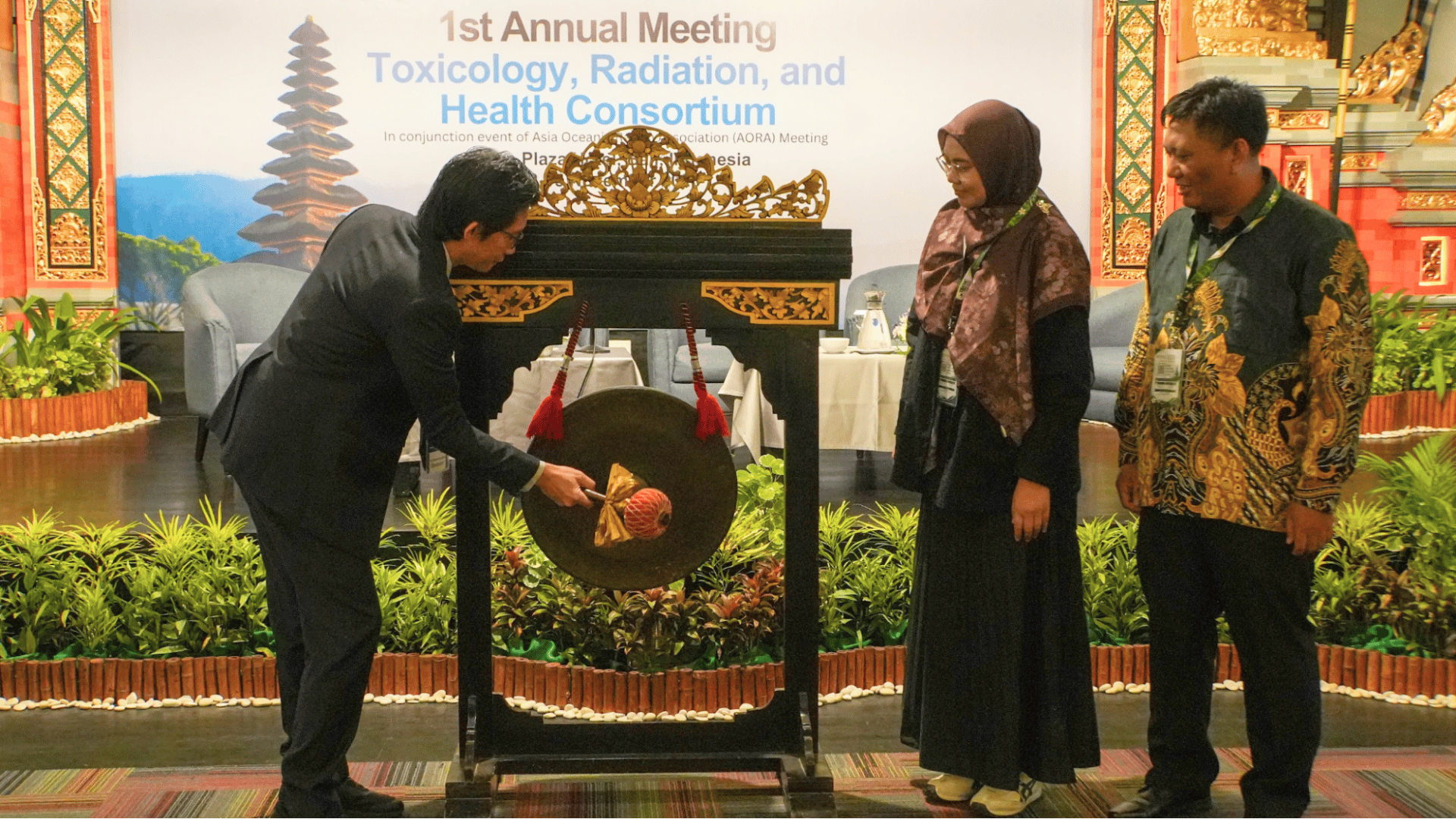
Participants represented Indonesia, Japan, Hungary, South Korea, China, Romania, and Canada/United States. The inaugural TRaHC meeting was officially opened by Dean of FK UNDIP, Prof. Dr. dr. Yan Wisnu Prajoko, M.Kes., Sp.B., Subsp.Onk(K), accompanied by TRaHC Chair, dr. Muflihatul Muniroh, M.Si.Med., Ph.D. The opening ceremony was marked by the ceremonial striking of a gong.
In his remarks, Prof. Yan Wisnu emphasized the important role of medical faculties in advancing research and innovation to address health challenges, including maritime health, which is particularly strategic for Indonesia as an archipelagic nation.
“Medical faculties have a strategic responsibility not only in education and healthcare services but also in driving research and innovation to address maritime health challenges. By strengthening collaboration and advancing scientific knowledge, we can contribute to building a more resilient and sustainable healthcare system,” said Prof. Yan Wisnu.
The Attaché for Science of the Republic of Indonesia in Vienna, Austria, Prof. Dr. Eka Djatnika Nugraha, S.Si., M.Hs., also highlighted the importance of international consortium networks in accelerating technology transfer and expanding the impact of cross-border research.
Addressing Radiation and Radon Gas Risks
One of the main topics discussed in the first scientific session was exposure to ionizing radiation and radon gas. This naturally occurring radioactive gas is odorless and can accumulate indoors, potentially increasing health risks when exposure occurs over an extended period.
Moderated by dr. Yora Nindita, M.Sc., Ph.D. (Universitas Diponegoro), the session featured AORA President Prof. Shinji Tokonami, Ph.D., from Hirosaki University, Japan. He presented developments in radon gas mapping across Asia and Oceania as part of efforts to better understand potential environmental exposure to natural radiation.
Representing Indonesia, Head of BRIN’s Research Center for Nuclear Safety Technology, Metrology, and Quality (PRTKMMN), Dr. rer. biol. hum. Heru Prasetio, discussed radiation protection standards and lifecycle management of cyclotron facilities in Indonesia. These facilities use particle accelerator technology for applications including medical diagnosis and therapy.
Meanwhile, Nur Rahmah Hidayati, M.Sc., a member of the United Nations Scientific Committee on the Effects of Atomic Radiation (UNSCEAR), presented global scientific assessments of the health effects of ionizing radiation and their relevance to safety monitoring in Indonesia.
TRaHC Chair, Vice Dean for Academic and Student Affairs of FK UNDIP, and Head of the Center of Excellence for Clinical Toxicology and Environmental Health (CCTEH), dr. Muflihatul Muniroh, M.Si.Med., Ph.D., emphasized TRaHC’s role as a platform connecting toxicology and radiation experts from different countries to strengthen international research collaboration.
Investigating Heavy Metal Exposure Among Pregnant Women and Children
In addition to radiation, the meeting addressed exposure to chemicals and heavy metals through a biomonitoring approach. This method measures the levels of chemicals or toxic metals in the human body, including through blood, hair, and urine samples, enabling early monitoring of environmental exposure.
The second session, moderated by Ni Made Utami Dwipayanti, S.T., Ph.D. (Universitas Udayana), focused on the health risks of chemical exposure among mothers and children. Prof. Atsuko Ikeda, Ph.D., from Hokkaido University, Japan, presented findings from birth cohort studies highlighting the importance of protecting children from environmental chemical exposure beginning during pregnancy.
Research on metal exposure among children was also presented by Dr. Aram Lee from Soonchunhyang University, South Korea. He shared findings from the detection of 18 types of metals in children across several countries, along with comparisons of their associated health risks.
Meanwhile, Prof. Mayumi Tsuji, M.D., Ph.D., from the University of Occupational and Environmental Health, Japan, shared insights from the Japan Environment and Children’s Study (JECS). This program monitors tens of thousands of children to investigate how environmental factors influence their growth and development.
Representing Indonesia, Dr. Hasnawati Amqam, S.K.M., M.Sc., from Universitas Hasanuddin, presented findings from research monitoring heavy metal exposure among pregnant women in Makassar. The study highlighted the importance of monitoring environmental contaminant exposure among vulnerable populations.
Strengthening International Research Collaboration
The event also featured interactive discussions and scientific presentations in oral and poster categories, evaluated by a multidisciplinary panel of judges. In addition to the main seminar, the first day’s agenda included an AORA coordination meeting held in a hybrid format to strengthen professional networks and radon research collaboration across Asia and Oceania.
Through this inaugural meeting, TRaHC is expected to serve as a platform for knowledge exchange and multidisciplinary research development in toxicology, radiation, and public health. The collaboration is also expected to strengthen the role of Indonesian researchers in advancing environmental epidemiology and clinical toxicology research internationally, while supporting efforts to create a safer environment for communities. (Humas FK UNDIP)