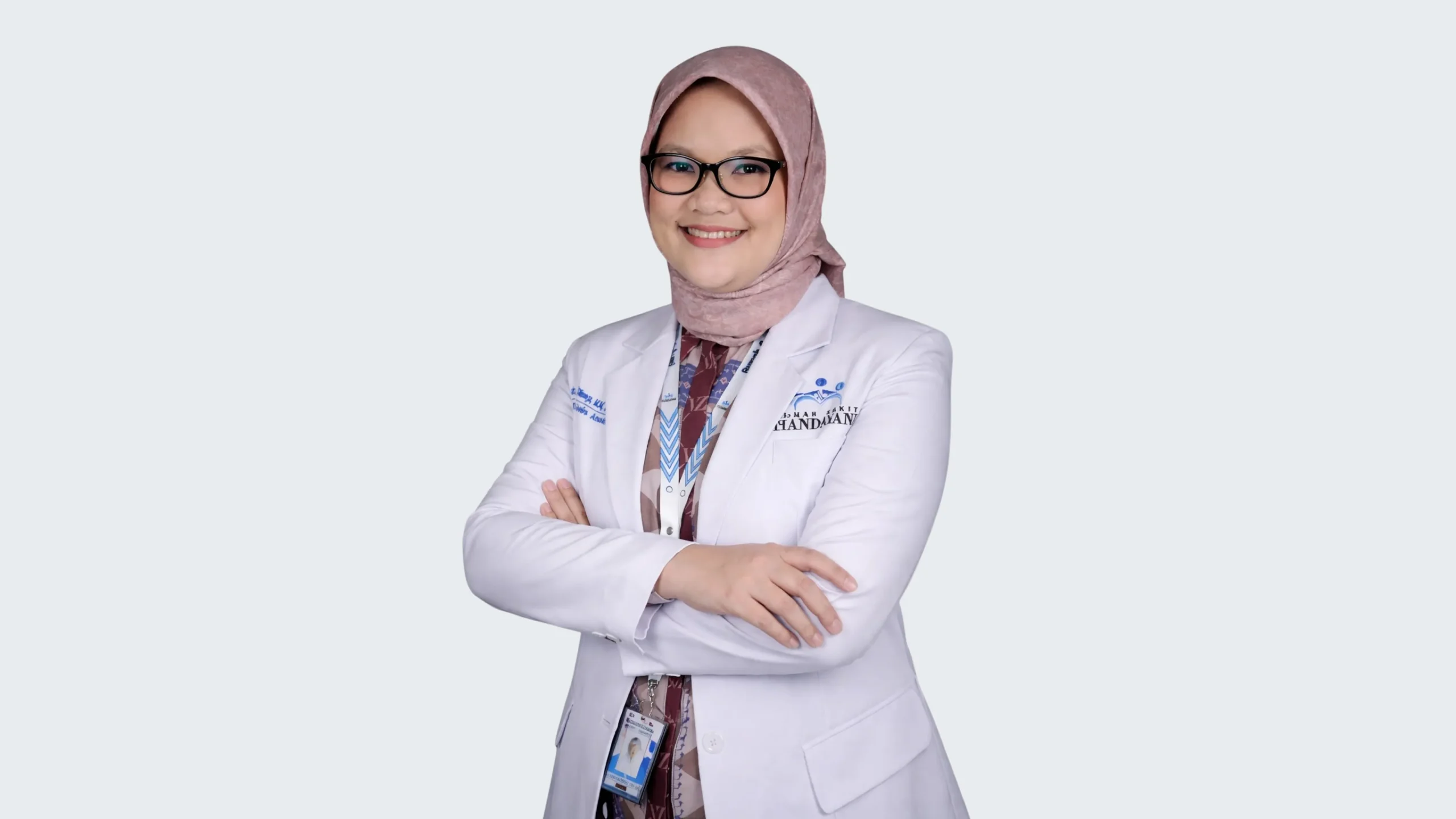
SEMARANG – Specialist medical education not only develops clinical competence but also shapes character, integrity, and leadership. This is reflected in the career journey of dr. Ratna Sari Ritonga, MM, Sp.A, FISQua, an alumna of the Pediatric Residency Program at the Faculty of Medicine Universitas Diponegoro (FK Undip), who is now entrusted with leading Handayani General Hospital in North Lampung as its Director.
For dr. Ratna, choosing FK Undip for her pediatric specialist training was not merely about advancing her medical knowledge, but also about finding an academic environment capable of shaping her way of thinking, character, and commitment to service as a physician.
“From the very beginning, I saw that FK Undip possessed a unique strength in combining academic tradition, clinical discipline, and humanitarian values. Becoming a pediatrician is a profoundly meaningful choice because children represent the future. When we care for a child, we are also safeguarding a family’s hopes and the future of the next generation,” she said.
Her years of training at FK Undip became one of the most important phases of her life. The academic and clinical experiences she gained helped shape her ability to make sound medical decisions while understanding patients holistically.
She explained that specialist education is a transformative process that teaches physicians to grow beyond theoretical knowledge and become capable of making appropriate clinical decisions, working collaboratively within multidisciplinary teams, and prioritizing empathy in healthcare services.
One of the most memorable experiences during her training involved caring for a critically ill child who eventually recovered. Witnessing the child smile again and seeing the family regain hope served as a powerful reminder that medical science must always go hand in hand with empathy, communication, and moral responsibility.
According to dr. Ratna, the resident mentoring system within FK Undip’s Pediatric Residency Program played a significant role in fostering clinical independence, discipline, and professional accountability. Through a gradual and structured supervision process, residents are guided to understand that clinical autonomy must be built upon knowledge, experience, accuracy, and awareness of professional boundaries.
“FK Undip taught us that a good doctor is not simply someone who makes decisions quickly, but someone who makes decisions accurately, ethically, and responsibly,” she noted.
These lessons proved highly relevant when she assumed her current role as Director of Handayani General Hospital in North Lampung. She believes that the systematic thinking and data-driven decision-making skills she developed during her education at FK Undip have become essential foundations for leading a healthcare organization.
“Leading a hospital essentially requires the ability to analyze problems, determine priorities, build systems, manage resources, and make decisions that have broad impacts. The mindset I developed during my specialist training has been invaluable in carrying out these responsibilities,” she explained.
Beyond academic and clinical competencies, dr. Ratna acknowledged the significant influence of lecturers, supervisors, and consultant physicians who served as role models throughout her education. She believes their example continues to shape her leadership style today.
“My mentors taught me how to be firm without being demeaning, disciplined without losing empathy, and academically critical without closing the door to dialogue. Leadership is not merely about giving instructions; it is about providing direction, maintaining standards, and helping others grow,” she said.
As both an alumna and a hospital director, dr. Ratna believes that the education provided by FK Undip remains highly relevant in addressing the challenges of national and global healthcare. Advances in medical technology, changing disease patterns, increasing demands for healthcare quality, and the need for interdisciplinary collaboration all require healthcare professionals who are adaptable and committed to lifelong learning.
In her view, FK Undip not only produces clinically competent physicians but also builds a strong foundation in scientific thinking, evidence-based medicine, discipline, and social awareness—qualities that are indispensable in modern healthcare systems.
Concluding the interview, dr. Ratna shared a message for FK Undip students and residents currently pursuing their education, encouraging them to approach every stage of their training with dedication and a spirit of service.
“Do not focus solely on graduation or academic titles. Strive for depth of knowledge, maturity of thought, strength of character, and sensitivity to human suffering. Society does not only need intelligent doctors; it needs doctors who are trustworthy, possess integrity, and have a genuine heart for service,” she advised.
The journey of dr. Ratna Sari Ritonga demonstrates that education at FK Undip produces not only competent medical specialists but also healthcare leaders capable of making meaningful contributions to society. Through a combination of academic excellence, character development, and humanitarian values, FK Undip continues to prepare healthcare professionals who are ready to address the future challenges of Indonesia’s healthcare sector. (Source: FK Undip Public Relations / Saradita)