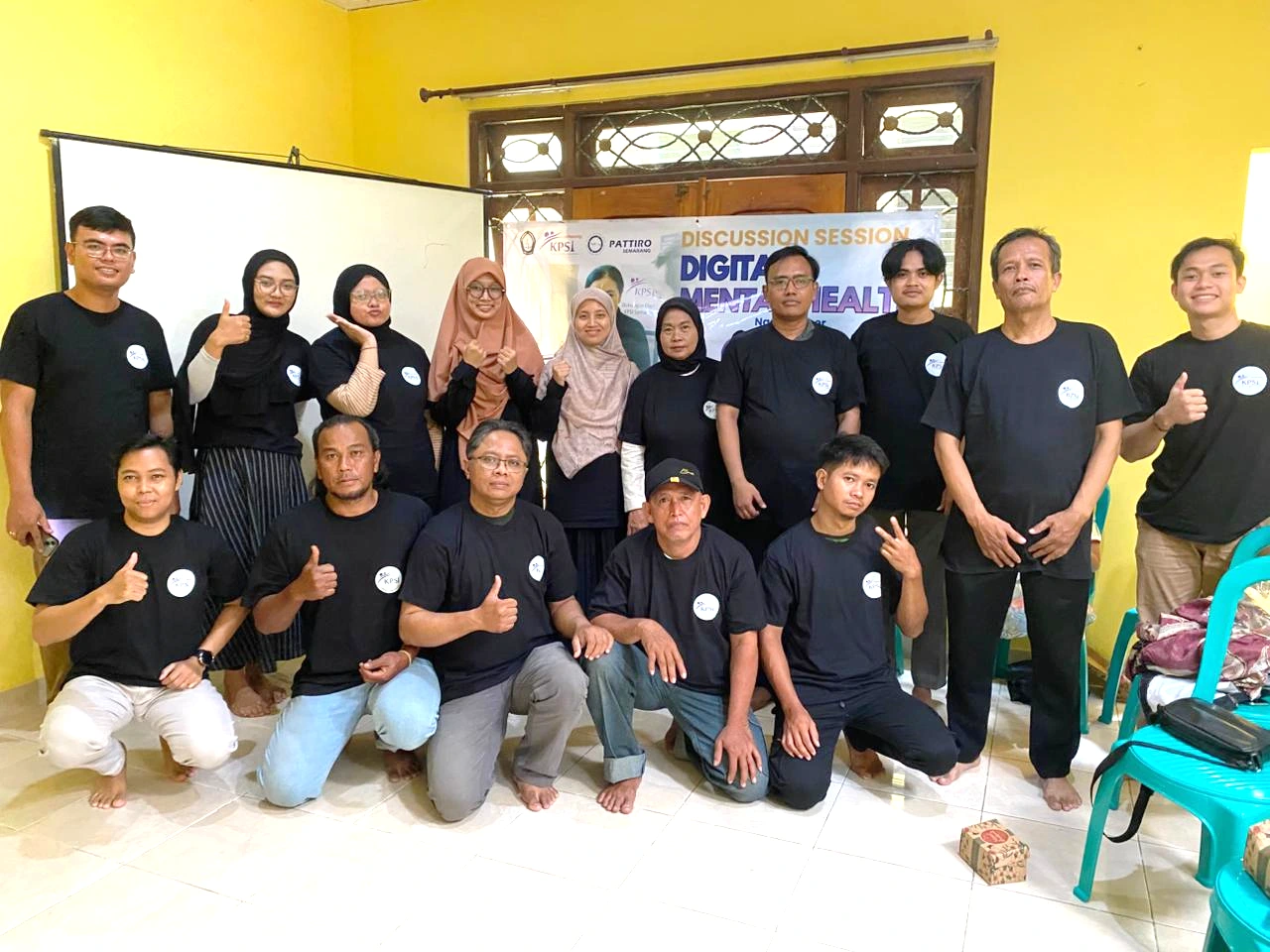
SEMARANG — Stigma from surrounding communities and the overwhelming flow of information in the digital era continue to pose serious challenges for people living with schizophrenia. In response to this issue, the Faculty of Medicine at Universitas Diponegoro (FK Undip), in collaboration with the Indonesian Schizophrenia Care Community (KPSI) Semarang Chapter and Pattiro Semarang, organized a discussion session titled “Digital Mental Health” on Sunday (May 3, 2026) at the Pattiro Semarang Office. Supported by an FK Undip community grant, the hybrid event was attended by more than 50 participants both offline and online via Zoom Meeting.
Head of the community service team, dr. Widodo Sarjana A.S., MKM., Sp.KJ., explained that the initiative was designed as a response to the growing use of the internet, which has both positive and negative impacts on people with schizophrenia. According to him, while the internet can provide easier access to treatment-related information, excessive exposure to social media may also trigger anxiety, depression, and self-diagnosis without professional guidance.
“Continuous exposure to social media content discussing emotional distress or suicidal thoughts can also become a trigger that worsens the psychological condition of other survivors. Therefore, the ability to filter information from the internet, avoid self-diagnosis, and balance digital activities with real-world social interaction and professional consultation is extremely important,” said dr. Widodo.
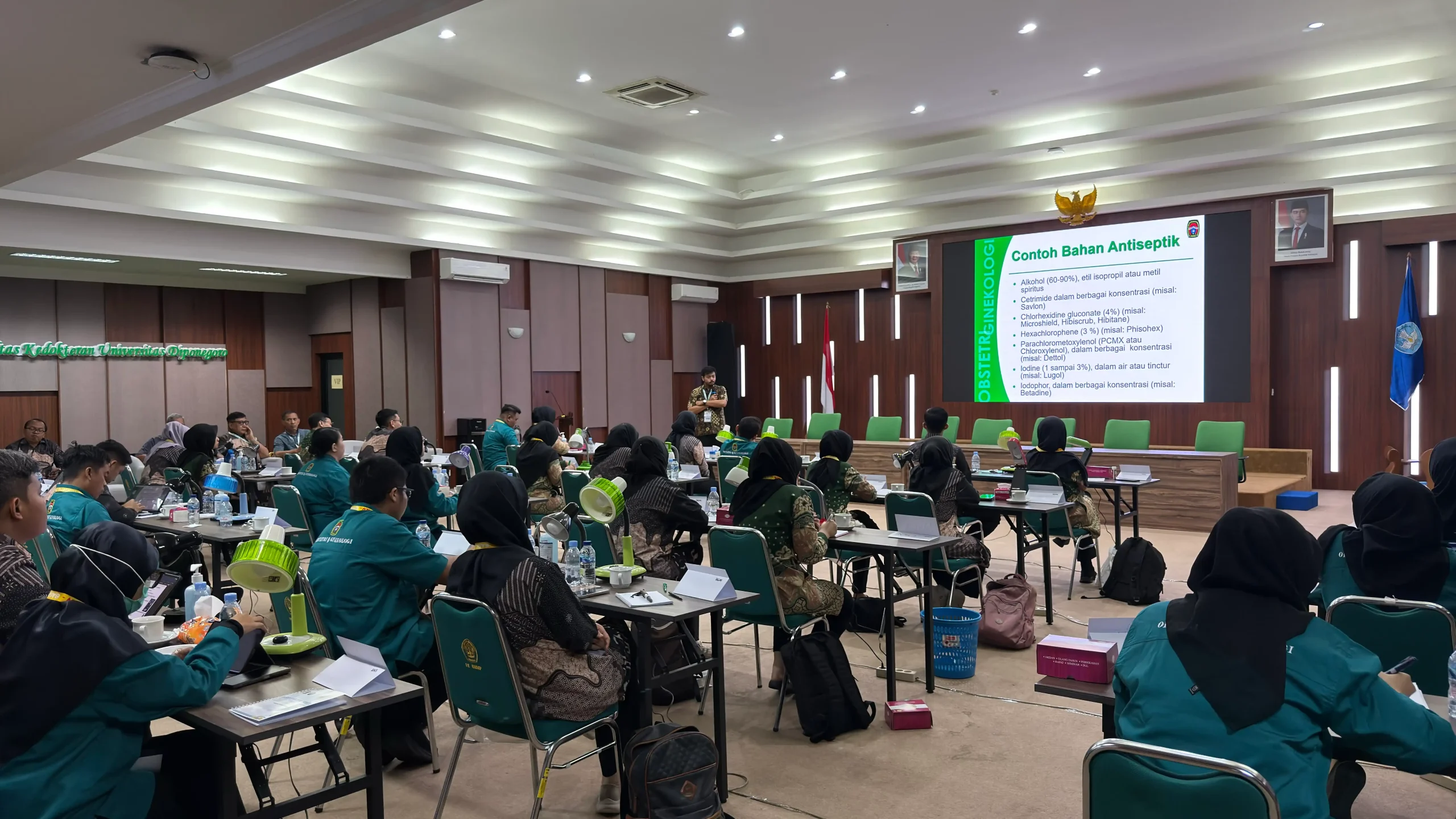
During the session, participants were also introduced to a technology-based recovery innovation through the HOPE4Skizofrenia program presented by Ns. Sri Padma Sari. The program reflects the university’s commitment to expanding educational outreach and improving mental health literacy, particularly for vulnerable communities. Through this activity, participants received comprehensive education from experts. dr. Widodo discussed the challenges of schizophrenia in modern society, including guidance on the safe use of psychiatric medication when combined with other medical treatments.
Participants were further equipped with anxiety management skills through a Stress and Anxiety Management practice session led by Ns. Nana Rochana, S.Kep., MN., and Ns. Marsha Yoke Nancy, S.Kep., M.N.Sc. In their presentation, they explained that prolonged stress can keep the body in a constant fight-or-flight state, increasing stress hormones and triggering excessive worry that may develop into anxiety disorders.
As a practical solution, participants were guided through mindfulness therapy, a non-judgmental awareness approach focused on present-moment experiences such as breathing regulation, aimed at helping transform negative thoughts into more adaptive ones. Participants were also introduced to SEFT (Spiritual Emotional Freedom Technique), a holistic approach integrating spiritual aspects and body energy point stimulation to help restore mental and emotional balance.
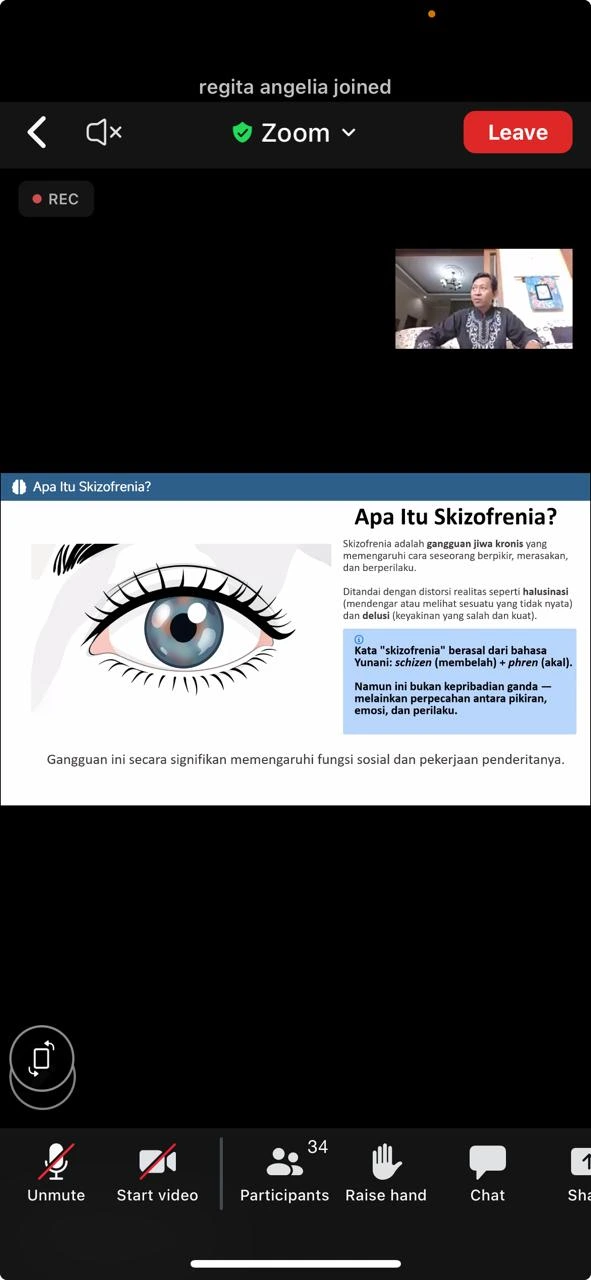
The stress management practice was considered highly relevant by participants. This was reflected in the strong enthusiasm throughout the discussion and question-and-answer session, where various real-life issues that often trigger anxiety were discussed openly and interactively. Responding to these dynamics, Founder and Chairman of KPSI National, Bagus Budi Utomo, who also attended the event, emphasized the importance of safe spaces and social support for survivors.
“Fellow survivors must continue encouraging and supporting one another so the community can remain active and sustainable. We hope this activity will not only provide new insights, but also foster independence and empower survivors, both in their clinical recovery process and in pursuing professional opportunities in the workplace,” he said.
The collaboration between FK Undip, KPSI Semarang Chapter, and Pattiro Semarang is expected to serve as an example of sustainable synergy between academia and civil society organizations in expanding inclusive psychosocial support for people living with schizophrenia.
“Through this program, supported by the 2026 Community Service Grant funding, we hope that people living with schizophrenia and their families will become more resilient, healthier, and no longer feel alone in their recovery journey, ” concluded dr. Widodo.